
Sports Injury Care in Austin, TX
A strain, sprain or overuse injury that is holding back your training, or your child's. We work out what is injured and why, then build a plan to get you back to practice and competition with a body that is ready for it.
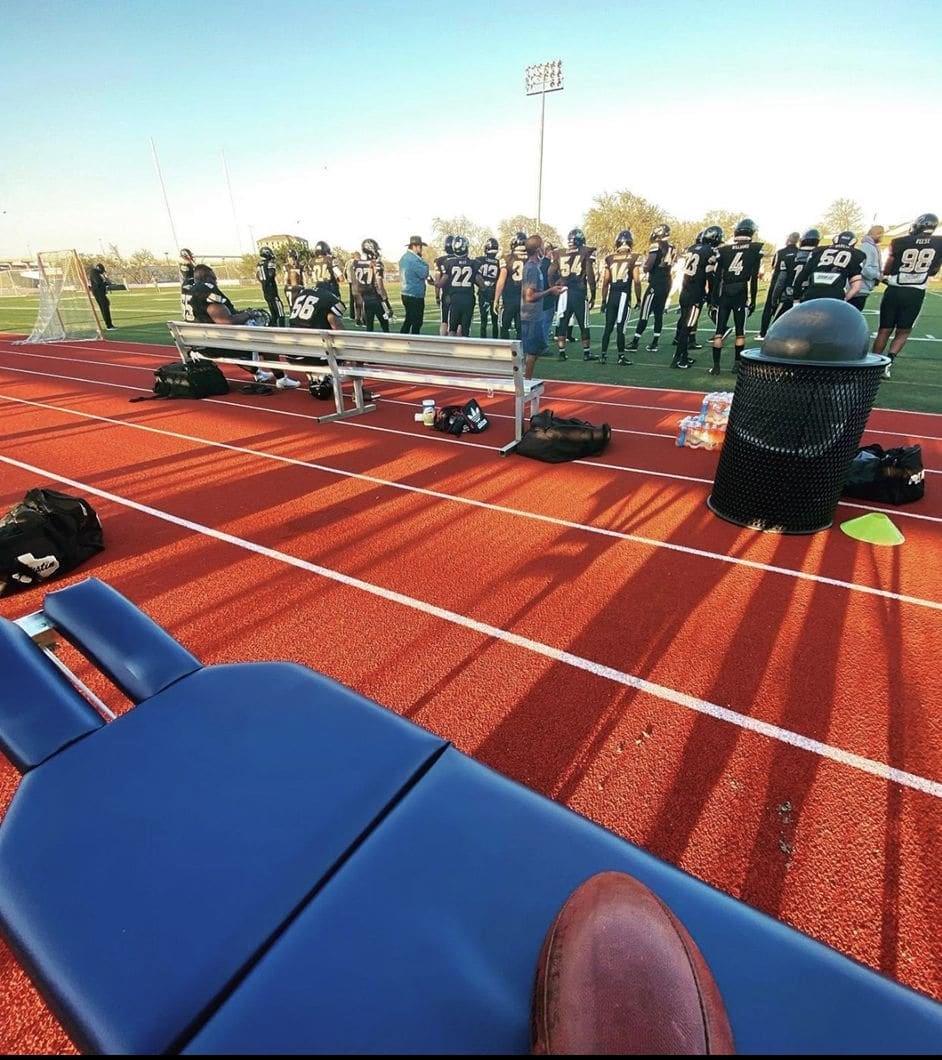
Understanding sports injury
A sports injury is any injury that happens through training or competition. Some are sudden, like a rolled ankle, a tweaked back or a pulled hamstring. Others build gradually from repetition, like a sore shoulder in a pitcher or swimmer, or knee and shin pain in a runner whose mileage climbed too fast.
Recovery isn't only about the pain settling. It's about getting back to full training with the strength, mobility and control your sport asks for, so the same problem doesn't return mid-season. That applies to adults and just as much to youth and pediatric athletes, whose bodies are still growing and who often play more than one sport.
What usually drives it
Sudden strains and sprains. A quick stretch, twist or impact overloads a muscle, tendon or ligament. Ankles, knees, hamstrings, shoulders and the low back are common sites.
Overuse. Repeating the same motion over and over, whether running, throwing, swimming or jumping, without enough recovery lets small stresses build into an injury.
Spikes in training load. A sudden jump in volume or intensity, a new season, a tournament weekend or a change of surface asks more of the body than it has been prepared for.
Growing bodies. Youth athletes go through growth spurts where bones lengthen faster than muscles and tendons adapt. Add year-round or multi-sport schedules and overuse injuries become more likely.
Your plan of care
Care starts with what is injured and how far along it is. Rehab exercises are the backbone: restoring range, rebuilding strength and control, then reloading the specific movements your sport needs, from cutting and jumping to throwing and lifting, in stages.
Hands-on care supports that work. Chiropractic adjustments restore motion to stiff joints in the spine and extremities, while myofascial release, instrument-assisted soft-tissue work (IASTM) and, where appropriate, dry needling address tight or scarred tissue that is limiting how you move.
Return to training is planned, not guessed. We set clear milestones before full practice and competition, and for youth athletes we keep parents in the loop on what to modify and when. The goal is the same at every age: move better, recover smarter and perform stronger.
What we look for
We start with how the injury happened, your sport and position, your training and competition schedule, and any deadlines like an upcoming season or race. For youth athletes, a parent or guardian is part of the conversation. Then a physical exam: how the injured area and the joints around it move, strength and stability side to side, and the sport movements that bring symptoms on.
That tells us what is injured, how irritable it is and what is safe to keep doing. If anything suggests a fracture, a significant ligament tear or another injury that needs imaging or a medical opinion first, we tell you and refer you before treating. Otherwise care usually starts the same visit, with a clear plan for training in the meantime.
What you can do at home
Modify, don't disappear. Most injuries still allow some training. Keep doing what doesn't aggravate it, swap out what does, and keep your coach in the picture.
Let soreness guide the load. Mild discomfort that settles within a day is usually fine. Pain that climbs during a session, or is worse the next morning, means the load was too high.
Treat recovery as training. Sleep, food and rest days are part of the plan, especially for young athletes juggling school, practice and games. Don't cram missed sessions into an already busy week.
Signs that need a different first stop
- A suspected fracture or dislocation, or a joint that looks visibly deformed
- Being unable to bear weight on the leg, or use the arm, after an injury
- Any head injury followed by headache, confusion, dizziness, vision changes or nausea (suspected concussion, which we do not manage)
- Rapid, significant swelling, or a pop followed by the joint giving way
- Numbness, tingling, coldness or color change below the injured area
If any of these apply, see a medical doctor before booking with us. If symptoms are sudden or severe, go to the emergency room or call 911.
Sports Injury FAQs
Yes. We see youth and pediatric athletes alongside adults, with care adapted to a growing body: gentler technique where it suits, and rehab focused on strength, control and sensible training loads. A parent or guardian is part of the conversation, and we refer to their pediatrician whenever something needs medical attention first.
It depends on the injury and how it responds. Rather than a set date, we use milestones: range of motion, strength compared side to side, and how the area handles the movements your sport demands. We'll give you an honest estimate after the assessment and update it as you progress.
No. If you or your child has had a head injury with symptoms like headache, confusion, dizziness or vision changes, see a medical doctor first. Once you have been medically cleared, we can help with neck or other injuries from the same impact.
Related conditions
Ready to feel like yourself again?
Trust us with your wellness and recovery needs. Book your visit today and let's build a personalized plan around you.