
Rehab & Corrective Exercises in Austin, TX
A personalized corrective program that activates, stretches, and strengthens weak muscle.

Understanding rehab exercises
Rehab exercises are the part of care that makes your results last. Dr. Janay Scott takes the time to build a personalized corrective exercise program designed to activate, stretch, and strengthen the weak and over-activated muscles behind your pain, bridging hands-on relief and real, lasting movement.
Your visit, step by step
After assessing how you move, Dr. Janay Scott prescribes a short, targeted set of drills and strength work matched to your goals, not a generic printout. It's the difference between feeling better for a week and staying better for good, and we adjust the plan as you progress.
What actually happens
We test what is actually weak. Strength and control get measured rather than assumed. It is common to find the painful side is not the weak one, and that changes the whole plan.
We pick three or four movements. Not a printout. A short, specific set chosen for the limitation we found, with the reasoning explained so you know why each one is there.
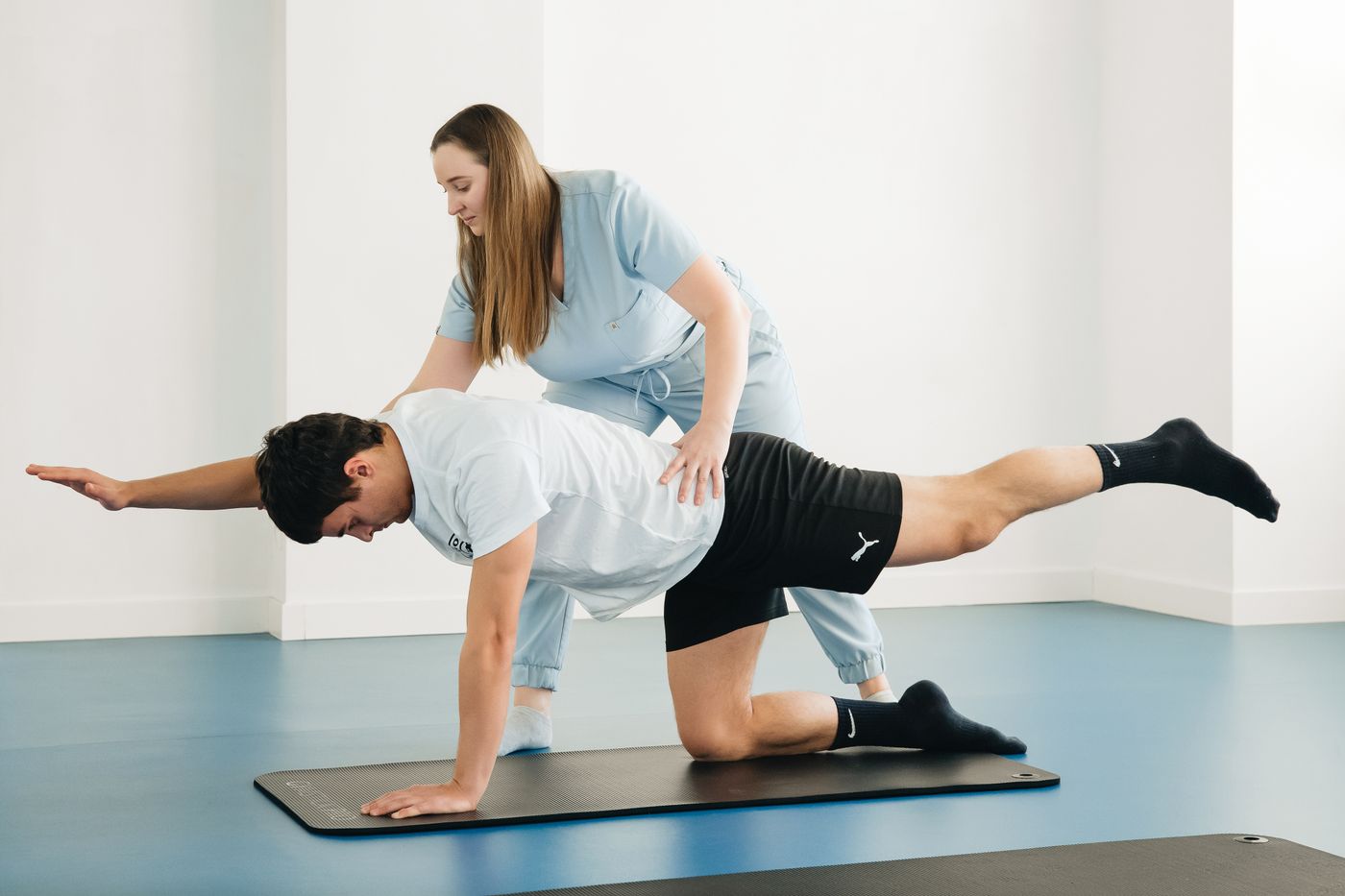
You do them here first. We coach each one in the room until it looks right. An exercise done wrong at home is worse than no exercise, so this part is not optional.
We progress them. Every few weeks the set changes as you get stronger. What is right in week one is usually too easy by week four.
The part that makes it last
Hands-on care changes how a joint moves today. Exercise changes what your body can tolerate, which is what decides whether you are back here in a month.
The pattern is familiar: someone feels great for a week after each visit, then slides back. That is almost always a capacity problem. The joint moves fine, but nothing around it is strong enough to keep it that way under normal load.
This is the least glamorous part of care and by far the most predictive of whether the result holds.

Why you only get a few movements
A twelve-exercise program has a completion rate close to zero. Four movements that take five minutes get done, and done beats optimal every time.
So the set is deliberately short and chosen for your specific limitation. If something is not earning its place, it comes out.
Consistency matters far more than intensity here. Five minutes daily will do more than an hour once a week, and it is much easier to build into an actual day.
What is normal and what is not
Some ache during and after is expected, especially in the first fortnight. Muscle that has not worked in a while will complain when it does.
The rule we use: mild soreness that settles within a day is fine. Pain that climbs during the set, or that is still worse the next morning, means the dose was too high and we scale it back.
Tell us either way. Adjusting load is routine, and it is far better than quietly stopping because something felt off.
When exercise is not the answer yet
Loading tissue is the goal, but timing matters. Very acute injuries, suspected fractures, and a handful of other presentations need settling or imaging before any strength work begins.
Certain heart, blood-pressure, and joint conditions change what is appropriate, which is part of what the first-visit screening covers.
If your presentation needs a different specialist first, we will say so. Loading something that needs assessing is not a risk worth taking.
The four jobs an exercise can do
Every movement we give you is doing one of these. Knowing which helps you understand why it is in your plan.
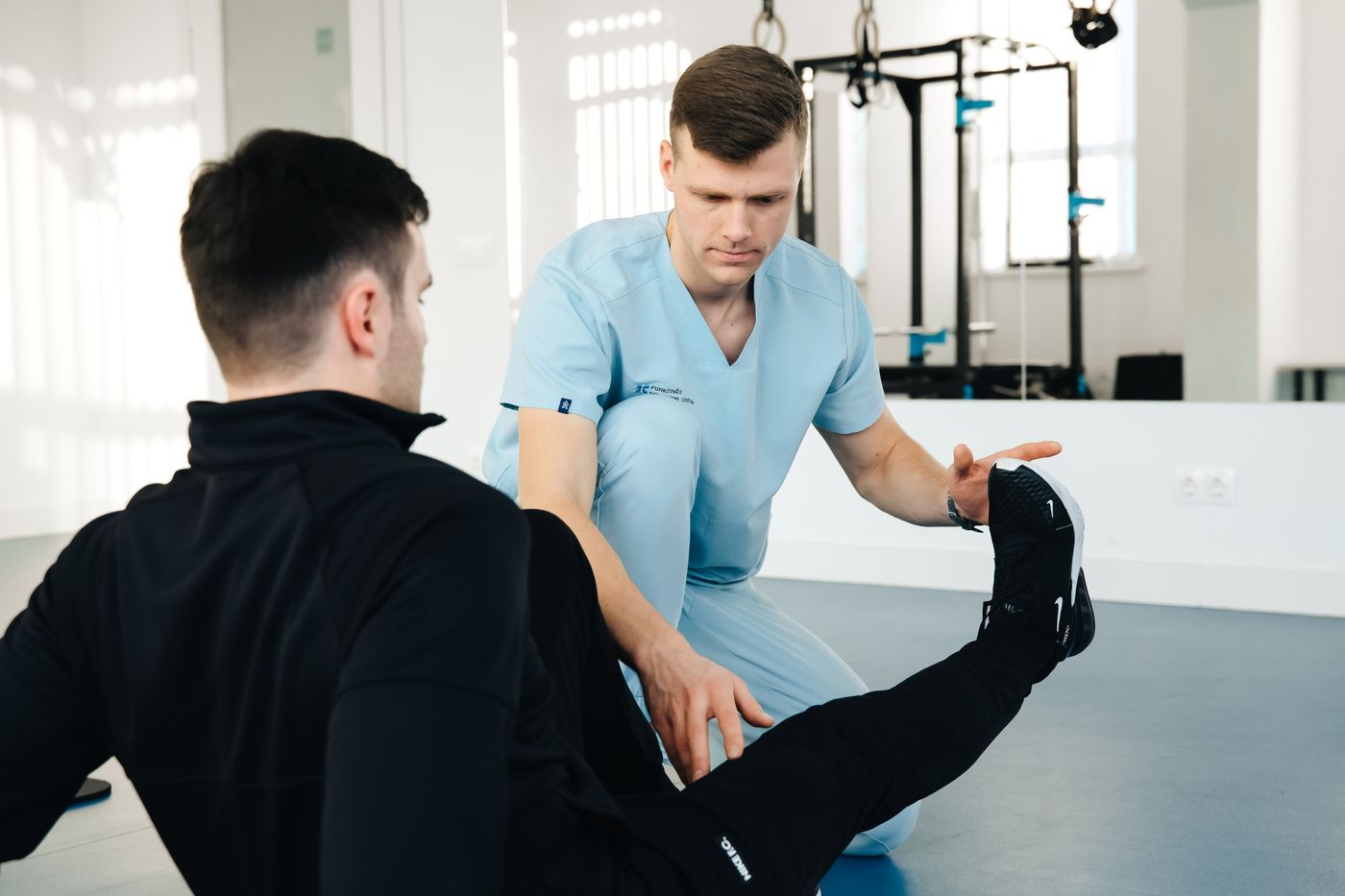
Activate. Wake up a muscle that has stopped contributing. Low load, high focus, usually the first thing after an injury.
Mobilize. Restore range that has been lost. Often what makes the following strength work possible in the first place.
Strengthen. Build capacity so the tissue tolerates real load. This is the part that stops the problem returning.
Integrate. Put it back into the movement you actually care about, whether that is running, lifting, or picking up a toddler.
Recover. Normatec compression boots run a sequenced squeeze up the legs, which is worth it after a heavy session or a long run. It is a recovery tool, not a substitute for the strength work.
Rehab Exercises FAQs
Hands-on care relieves the problem; strength and mobility work keep it from coming back. The adjustment restores motion, and exercise teaches your body to hold it and handle load, so you don't end up in the same spot a month later.
Less than you'd think. We give you a short, targeted set, usually a handful of movements that take a few minutes, chosen to fix your specific limitation, not a long list you'll never do.
Usually not. Most of what we prescribe can be done at home with little or no equipment. If you do train, we'll fold the work into what you're already doing.
Other ways we can help
Ready to feel like yourself again?
Trust us with your wellness and recovery needs. Book your visit today and let's build a personalized plan around you.