
Plantar Fasciitis Care in Austin, TX
Sharp pain under the heel with your first steps in the morning or after sitting, or a heel that aches during and after a run. We find what is overloading the foot and build a plan to get you back to running, training and standing comfortably.
Understanding plantar fasciitis
The plantar fascia is a thick band of tissue running along the sole of the foot from the heel to the toes. It supports the arch and helps the foot act like a spring every time you walk, run or jump. When it is loaded more than it can handle, it gets irritated where it attaches to the heel, and that is the familiar plantar fasciitis pain.
It is rarely just a foot problem. Tight calves, a stiff ankle, weak foot and hip muscles, and sudden jumps in mileage or time on your feet all change how much load reaches the fascia. Getting it to settle means looking at the whole leg, not just the sore spot under the heel.
What usually drives it
A jump in training load. Adding mileage, speed work, hills or jumping faster than the tissue can adapt is one of the most common triggers in runners and court athletes.
Tight calves and a stiff ankle. When the calf and Achilles are tight, or the ankle doesn't bend well, more strain passes into the fascia with every step.
Weak foot and hip muscles. The small muscles of the foot and the muscles around the hip help control the arch. When they aren't doing their share, the fascia takes more of the load.
Footwear and surfaces. Worn-out shoes, a sudden change of shoe, long hours standing on hard floors or going barefoot more than usual can all add up over time.
Your plan of care
Care follows what the assessment finds. Instrument-assisted soft tissue work (IASTM, Graston-style) is often a good fit here, working along the sole of the foot, the calf and the Achilles to free up restricted tissue. Myofascial release and trigger point work address tight calf and foot muscles that keep pulling on the heel.
If the ankle or the small joints of the foot have stiffened up, chiropractic extremity adjustments and mobilization restore motion so load spreads more evenly through the foot.
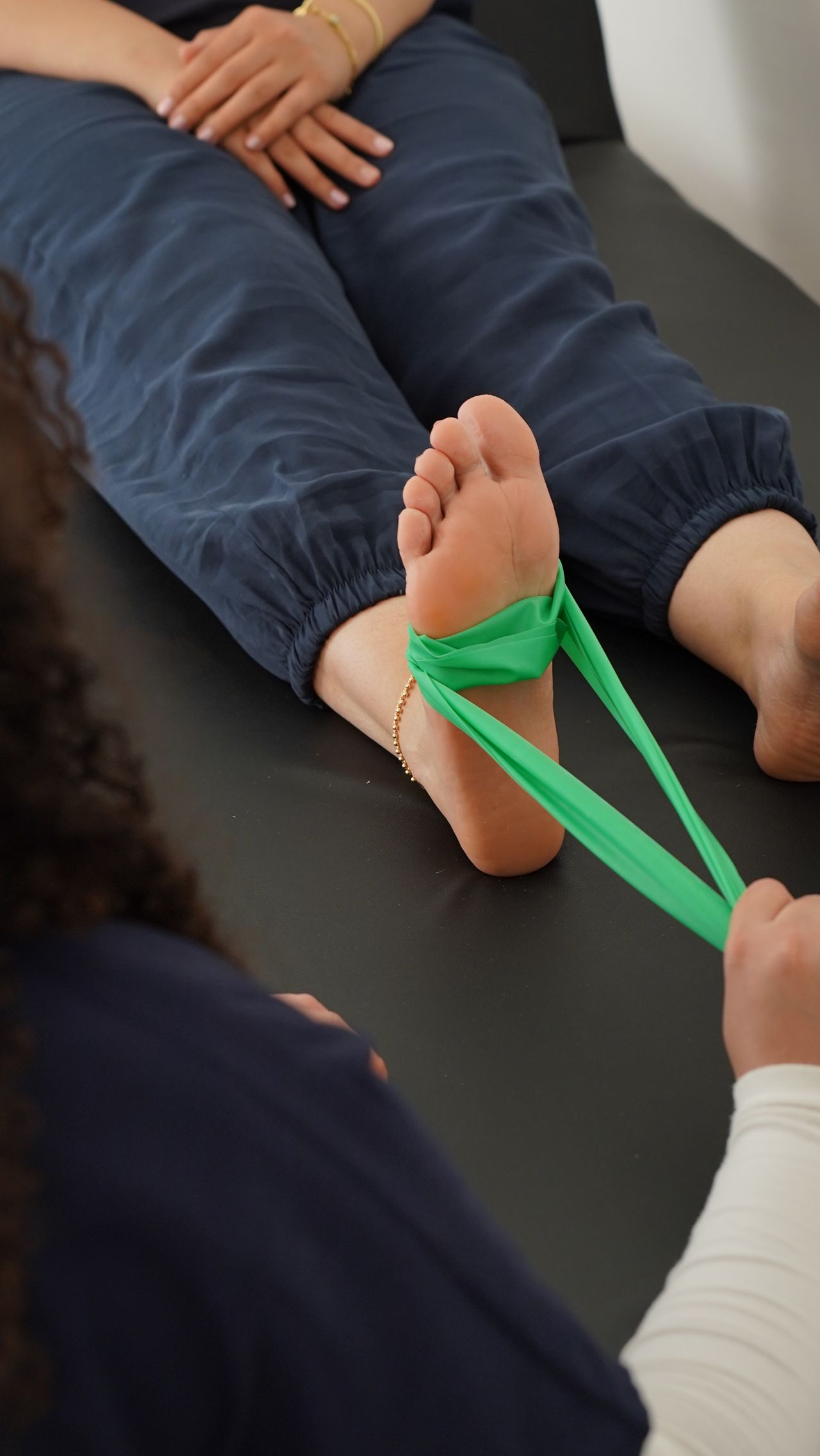
Rehab exercises are what make the progress last. Calf and foot strength, ankle mobility, hip control and a gradual, planned return to running and jumping, so you finish care knowing how to manage your training load and keep it from coming back.
What we look for
We start with when the heel pain began, how it feels first thing in the morning and during activity, and any recent changes to your training, shoes or time on your feet. Then an exam: where exactly it is tender, how your ankle, foot and big toe move, calf flexibility, single-leg balance and strength, and how you walk, squat and hop if that is comfortable.
That tells us whether the fascia is the main problem or whether something else, such as the Achilles, a nerve or a stress reaction in the bone, fits the picture better. If anything points to a fracture or another problem that needs imaging or a medical opinion first, we tell you and refer you before treating. Otherwise care usually starts the same visit.
What you can do at home
Ease into your first steps. Before you get out of bed, a few gentle ankle circles and toe movements can take the edge off those painful first steps.
Adjust your training, don't just stop. Cut back the volume or intensity that brings the pain on, and swap in lower-impact options like cycling or swimming while it settles. We'll help you plan the return to running and jumping.
Go easy on bare feet. Walking barefoot on hard floors often aggravates it. Wearing supportive shoes or sandals around the house is a simple change worth trying.
Signs that need a different first stop
- Heel pain after a fall or jump, especially if you can't bear weight on the foot
- A sudden pop or sharp pain at the back of the heel, or trouble pushing off (possible Achilles rupture)
- Numbness, burning or tingling in the foot
- Swelling, redness or warmth in the foot with fever or feeling unwell
- Any foot pain, wound or change in feeling in the foot if you have diabetes
If any of these apply, see a medical doctor before booking with us. If symptoms are sudden or severe, go to the emergency room or call 911.
Plantar Fasciitis FAQs
For plantar fasciitis driven by training load, tight calves, a stiff ankle or weak supporting muscles, soft-tissue work, joint mobilization and rehab exercises are a common, conservative approach. The first visit is about finding what is overloading the fascia, and we refer you on if the exam points elsewhere.
It varies. Heel pain that has only been around for a few weeks often responds sooner than pain that has built up over months. We'll give you an honest estimate after the assessment and adjust the plan as you progress.
Not always. Many runners can keep some running with changes to distance, pace and surface while the heel settles. We'll help you work out what to keep, what to pause and how to build back safely.
Related conditions
Ready to feel like yourself again?
Trust us with your wellness and recovery needs. Book your visit today and let's build a personalized plan around you.