
Therapeutic Cupping in Austin, TX
Gentle suction and heated cups that decompress tight tissue and boost circulation.
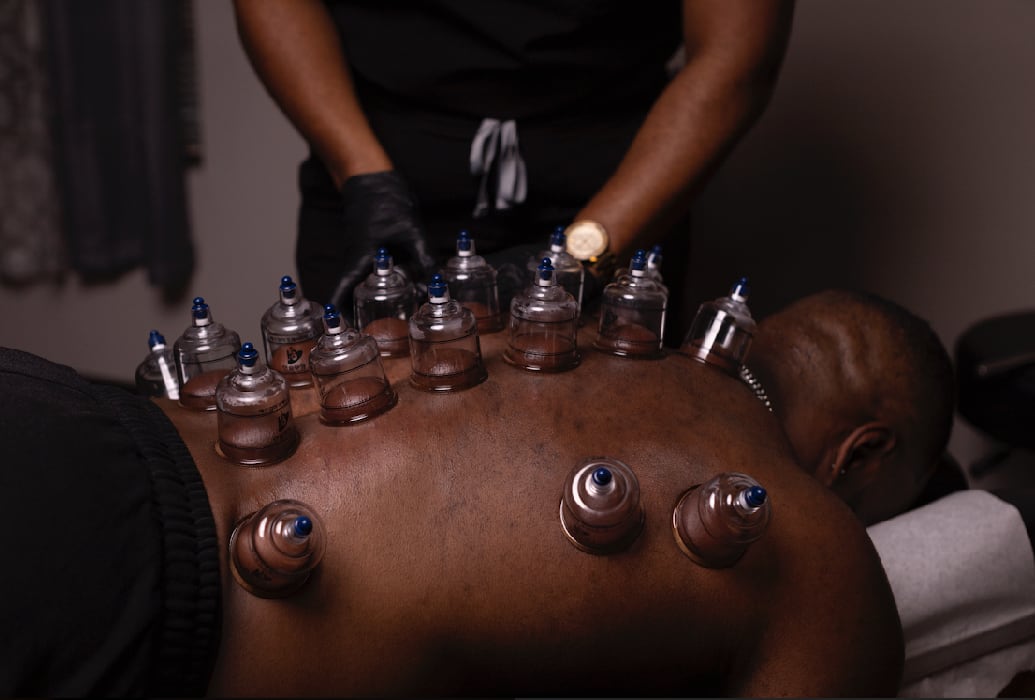
Understanding therapeutic cupping
Therapeutic cupping uses heated cupping glasses and targeted massage techniques to decompress tight tissue and draw fresh blood flow to areas holding tension. By lifting the skin and muscle rather than pressing down, cupping releases restrictions that are hard to reach with hands-on work alone.
Your visit, step by step
Your therapist places cups over the areas holding tension and may glide or reposition them for a massage-like effect. Cupping leaves temporary circular marks, which are increased blood flow rather than bruising, and they fade within a few days. Most people find it deeply relieving.
What actually happens
We find the tight areas. A few minutes of hands-on assessment to work out which areas are actually holding tension, rather than guessing from where you point.
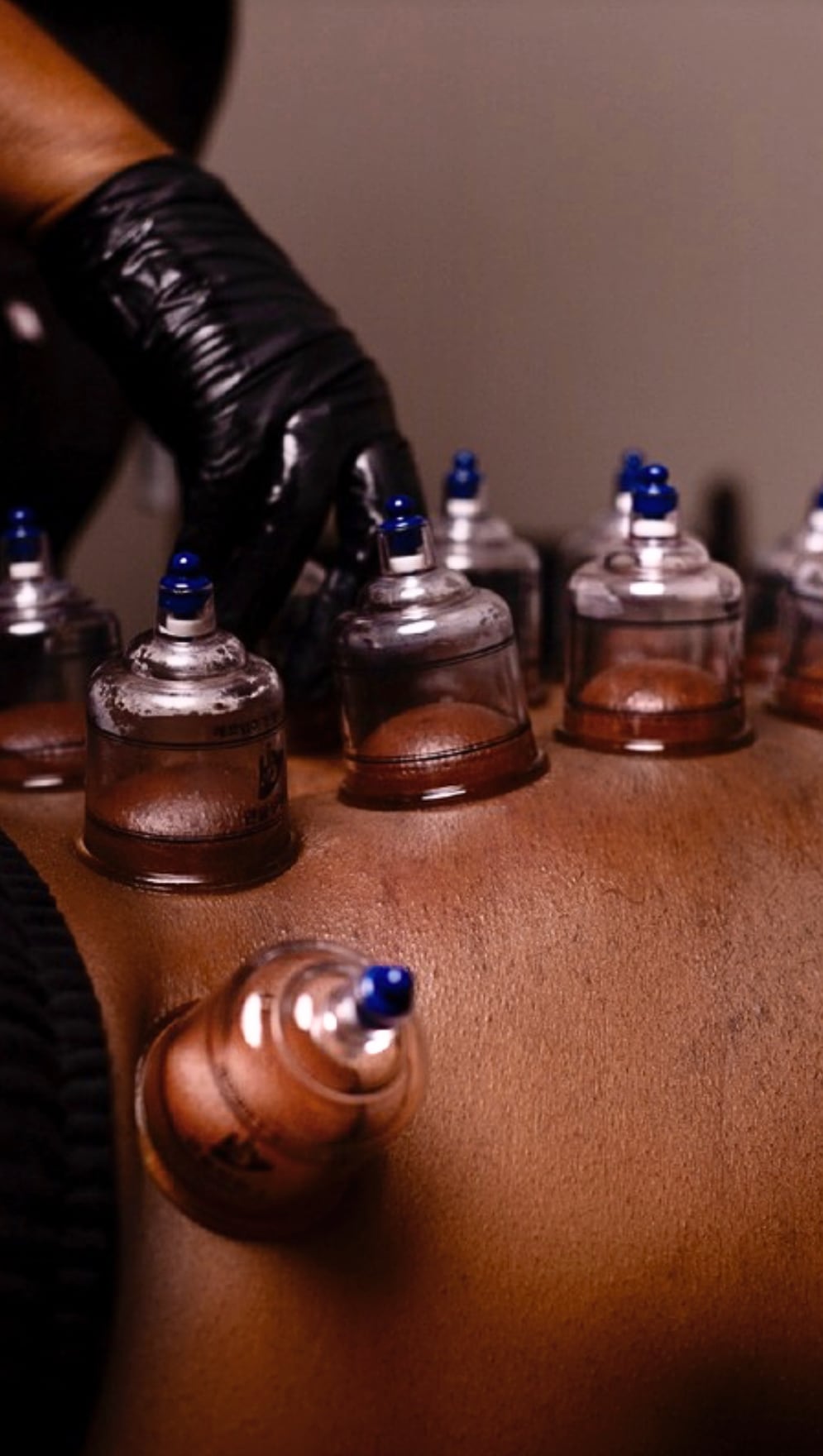
Cups go on. Each cup is placed and the air drawn out, lifting the skin and tissue underneath. You feel a firm pull rather than pressure. Tell us if it is too strong and we ease it off.
Static or gliding. Cups either stay put for a few minutes or get moved across oiled skin for a massage-like effect. Which one depends on the area and how it responds.
Cups come off, and we check. The whole thing takes ten to twenty minutes. We reassess movement afterwards so you can feel the difference rather than take our word for it.
Why lifting works when pressing does not
Almost every hands-on technique presses into tissue. Cupping does the opposite: it lifts the skin and the layer underneath away from what it is stuck to. That decompression reaches restrictions that pressure tends to flatten rather than free.
Drawing the tissue up also pulls fresh blood into an area that has been tight and under-circulated. That is the part people notice as warmth and looseness afterwards.
It is not a substitute for the rest of your care. It works best as the step that softens an area so an adjustment or some targeted soft-tissue work can actually take.
What those circles actually are
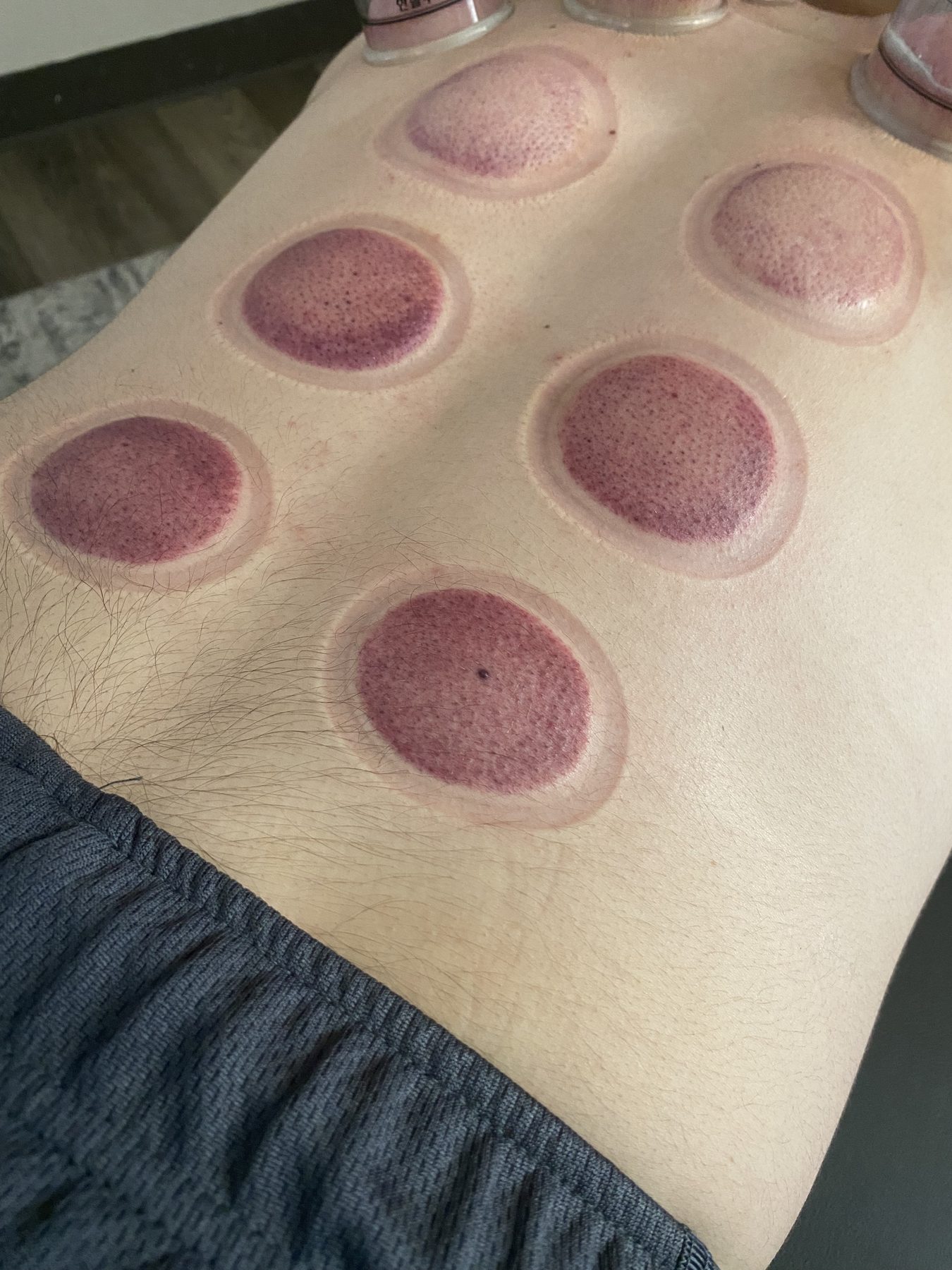
The circles are the single most asked-about part of cupping, and the most misunderstood. They are not bruises. A bruise is bleeding from impact trauma; these are small vessels releasing under suction, with no impact involved.
Colour tracks how congested the area was, not how hard we worked. Faint pink usually means the tissue was in decent shape. Darker marks tend to show up over areas that have been tight for a long time, and they fade as the area improves across sessions.
They typically clear in three to seven days and need no aftercare. If you have an event coming up, say so and we will keep the suction light or work somewhere less visible.
Getting the most out of it
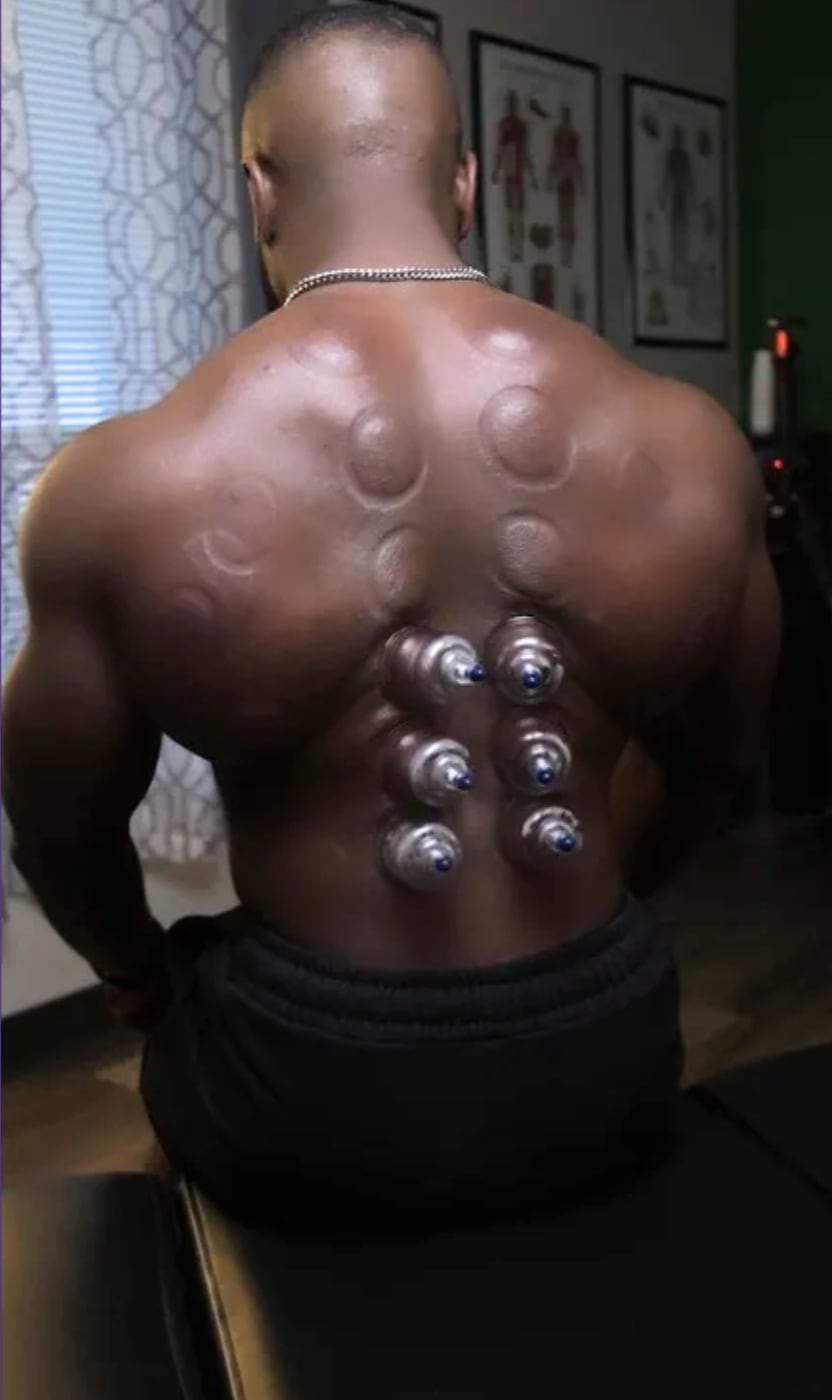
Drink water and keep moving gently. The area has just had a lot of fluid drawn through it, and easy movement helps that settle rather than stiffen.
Skip the hard training session that same day. Not because cupping is fragile, but because the tissue responds better to a light day and you will feel better for it tomorrow.
Most people notice the change straight away and again the following morning. If an area needs several rounds, we will say so up front rather than booking you in indefinitely.
Who this is not for
Cupping is low-risk for most people. The marks are the main side effect, along with occasional light-headedness if a large area is done at once.
We avoid it over broken or irritated skin, recent injuries that are still inflamed, and areas affected by certain circulatory or clotting conditions. Blood thinners are not an automatic no, but they change how we set the suction, so tell us.
If cupping is not the right tool for what you have got, we will say so and use something that is.
The variations we use
Cupping is not one technique. Which we reach for depends on the area, how sensitive it is, and what we are trying to change.
Static cupping. Cups stay in one place for several minutes. Best for a specific stubborn area that needs sustained decompression.
Gliding cupping. Oil on the skin, then the cup is moved along the muscle. Covers more ground and feels closer to a deep massage.
Silicone cupping. Softer cups squeezed by hand rather than pumped. Much gentler, and easy to adjust mid-session.
Cupping with movement. You move the limb while the cup is on. Useful when a restriction only shows up through part of the range.
Therapeutic Cupping FAQs
Cupping shouldn't be painful. Most people find it relieving. The temporary circular marks are from increased blood flow to the area, not bruising, and they typically fade within a few days.
It's commonly used for tight, sore muscles, chronic tension in the back and shoulders, and recovery after hard training. Cupping works especially well alongside chiropractic adjustments and myofascial release.
Usually a few days to about a week. The color reflects how much tension and stagnation was in the tissue, and it fades on its own with no special care.
Other ways we can help
Ready to feel like yourself again?
Trust us with your wellness and recovery needs. Book your visit today and let's build a personalized plan around you.