
Chiropractic Care in Austin, TX
A hands-on, non-invasive approach that relieves pain and restores mobility at the source.
Understanding chiropractic care
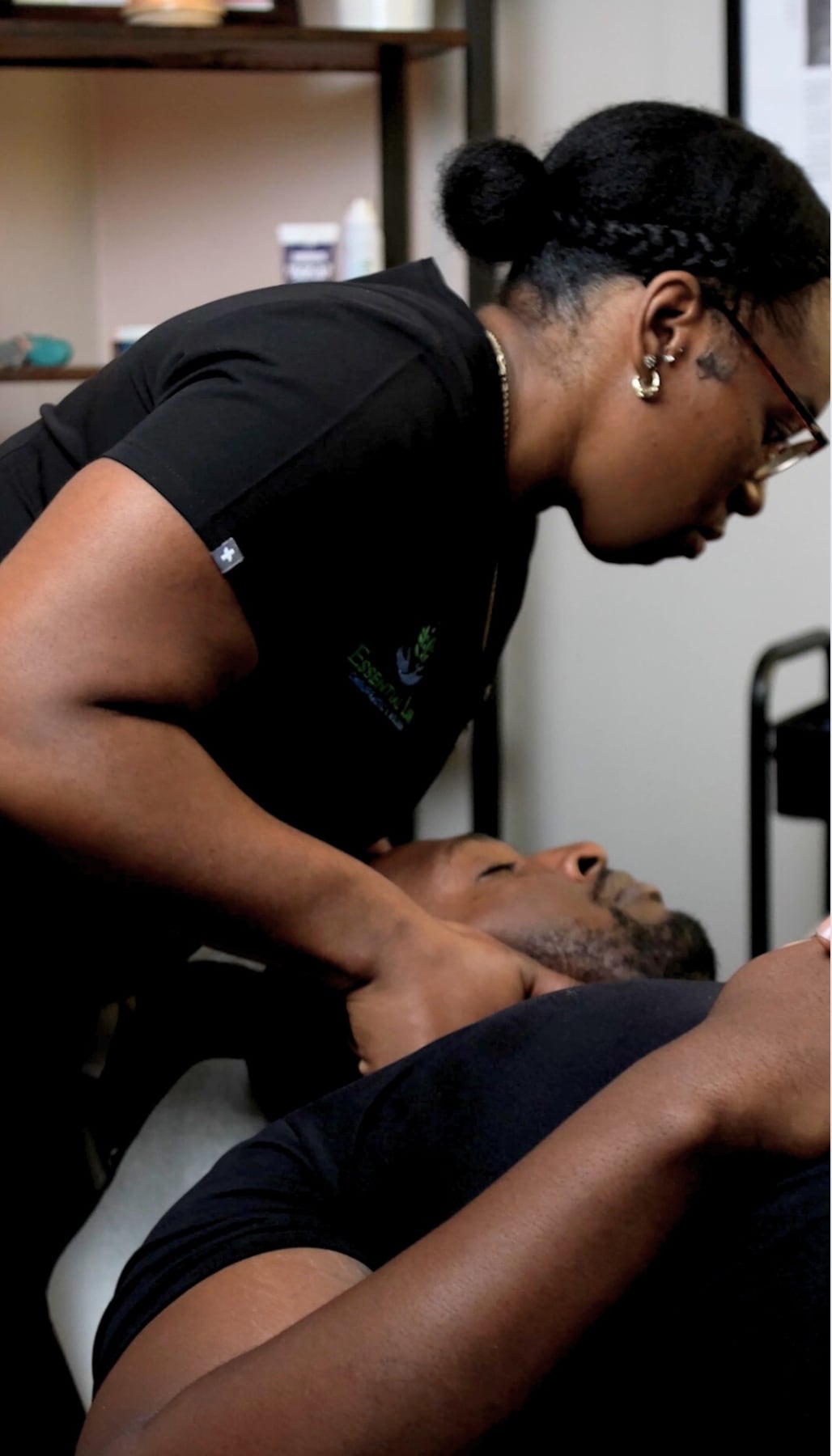
Chiropractic care is a hands-on, drug-free approach to relieving pain and restoring how your body moves. Using gentle, non-invasive techniques, Dr. Janay Scott restores motion to stiff, restricted joints in the spine and extremities so your nervous system and muscles can work the way they're meant to.
Your visit, step by step
Your visit starts with a thorough history and exam so we understand what's actually driving your symptoms. From there, Dr. Janay Scott uses precise, comfortable adjustments, tailored to your body and never forced, often paired with soft-tissue work and simple home exercises so the relief holds.
What actually happens
We talk first. Where it hurts, when it started, what makes it worse, and what you have already tried. Most of what we need comes out of this conversation rather than the exam.
We watch you move. Bending, turning, reaching. We are looking for which joints have stopped moving and which muscles are covering for them, because the sore spot is often not the source.
We explain what we found. In plain language, before anything happens. You should be able to repeat it back to someone at home. If imaging or a referral makes more sense than treatment, we say so here.
We treat, then give you homework. The adjustment restores motion. Two or three simple exercises keep it. You leave knowing what to do between visits and roughly how long this should take.
What an adjustment actually does
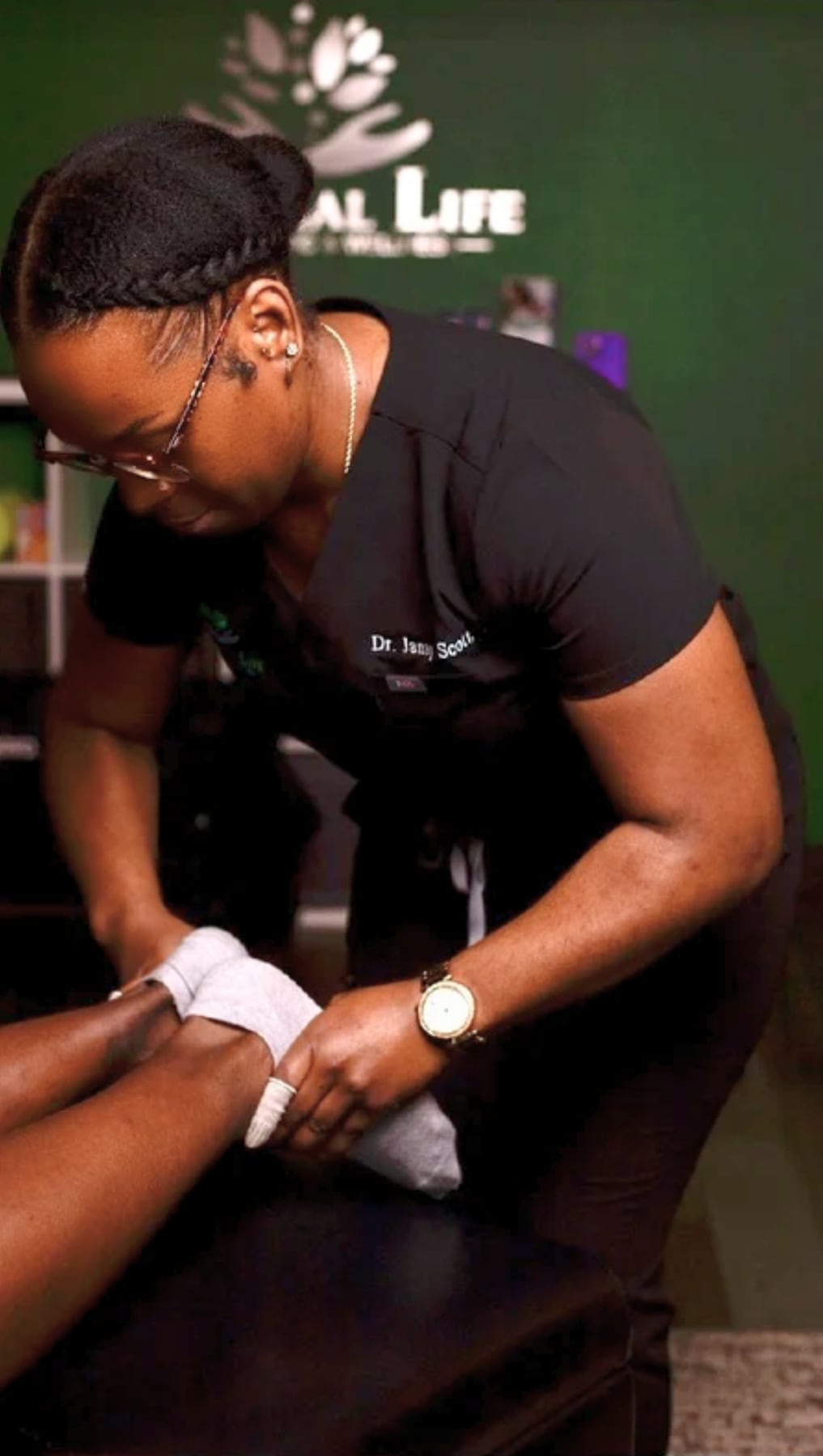
Joints in your spine are built to move through a small, specific range. When one stops moving properly, the joints either side start compensating, the muscles around it tighten to protect it, and the whole area gets stiff and sore. That restriction is what an adjustment targets.
The technique is a quick, shallow, precisely aimed impulse. It is not forceful, and it is nothing like the dramatic twisting you have probably seen in videos. The goal is to restore motion to one joint, not to rearrange your spine.
The popping sound gets far more attention than it deserves. It is a gas bubble forming as pressure in the joint changes, the same thing that happens when you crack a knuckle. Plenty of effective adjustments make no sound at all, and a loud one is not a better one.
Why the exam matters more than the technique
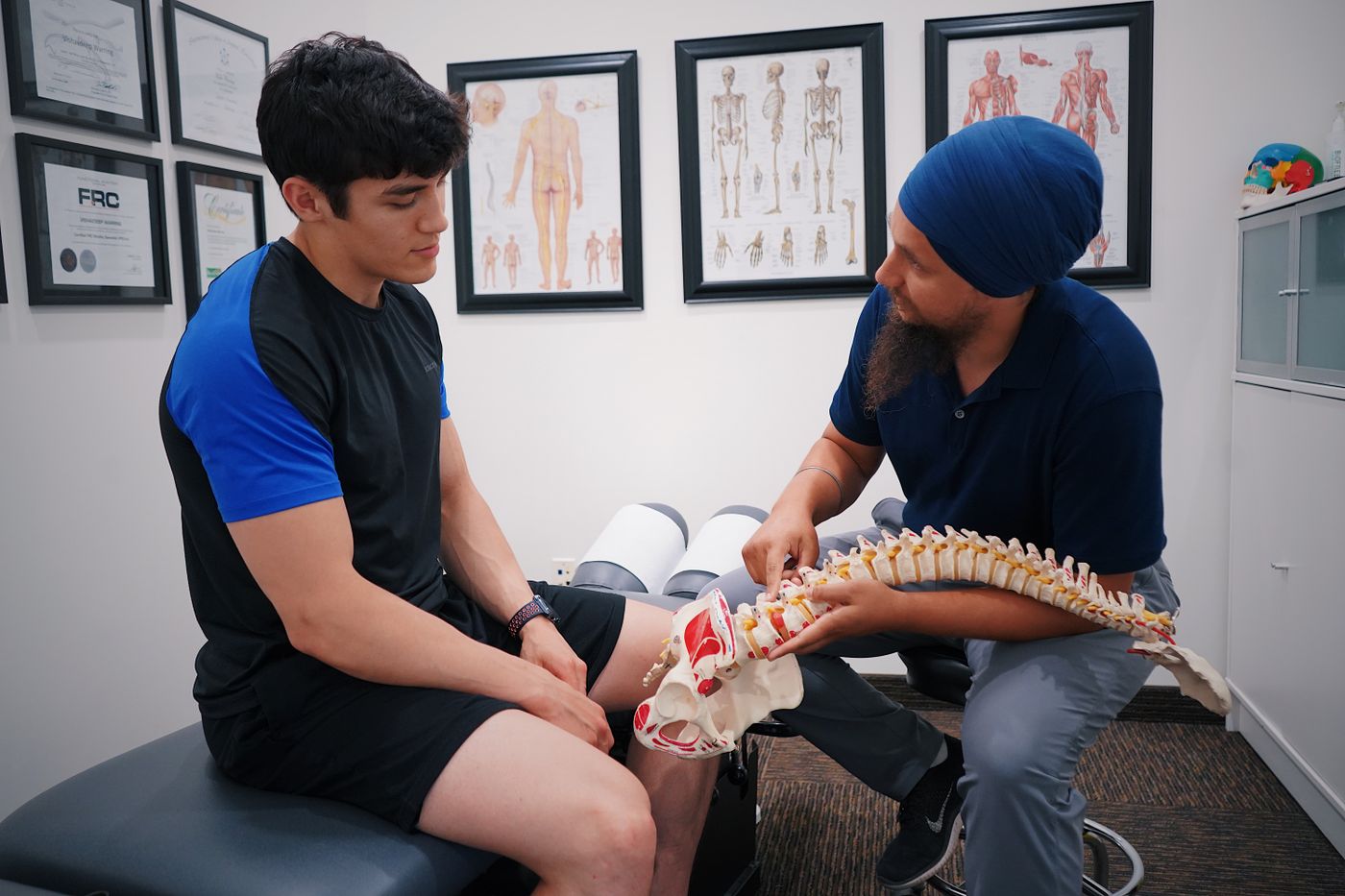
The place that hurts is often not the place that is failing. A stiff mid-back regularly shows up as neck pain. A hip that has stopped rotating shows up as a sore lower back. Adjusting only where it hurts treats the symptom and lets the cause carry on.
So the first visit is mostly assessment: how you move, where the restriction sits, whether the pain follows a pattern that fits a joint problem at all. We check for the things that mean you should see someone else, and we would rather find those on day one than three visits in.

Why we send you home with exercises
An adjustment restores motion. It does not, on its own, teach your body to keep it. That is what the exercises are for, and it is the difference between feeling better for a few days and staying better.
The prescription is deliberately small: usually three or four movements that take five minutes. A long printout gets ignored, and an ignored program does nothing. We would rather give you less and have you actually do it.
The plan changes as you do. What is right in week one is usually too easy by week four, so expect it to be adjusted as your range and strength come back.
Who this is not for, and when we refer out
For most people this is a safe, well-studied way to restore joint motion and relieve pain. Mild soreness for a day afterwards is the most common side effect, similar to how you feel after starting a new exercise.
It is not right for everyone. Certain fractures, infections, inflammatory conditions, some bone-density issues, and a handful of other presentations rule out manual technique, either entirely or in the area concerned. That is part of what the first-visit screening is for.
If your symptoms point somewhere outside our scope, we will tell you plainly and refer you on. Sending you to the right person is a better outcome than keeping you on our schedule.
Not every adjustment is the same
We pick the technique to match your body and what you are comfortable with. If a gentler approach suits you better, that is what you get.
Diversified. The classic hands-on adjustment, and the one most people picture. Quick, shallow, and specific to a single joint.
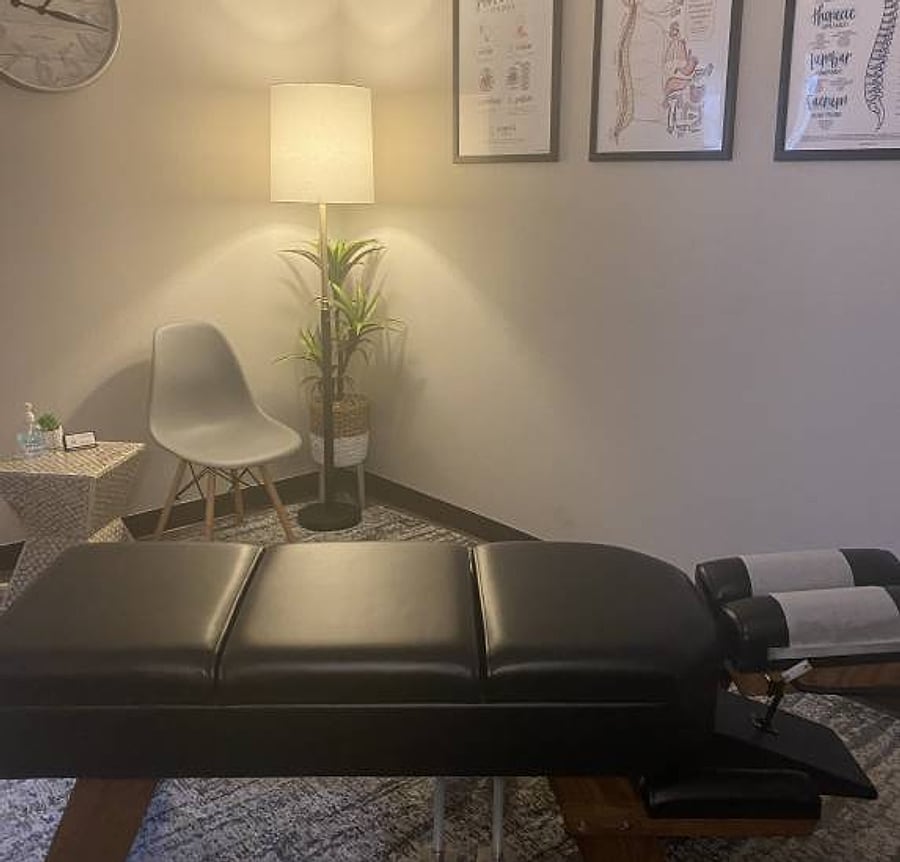
Drop-table. A section of the table drops a few centimetres as we apply pressure. Much lighter force, useful for tender areas or nervous first-timers.
Instrument-assisted. A spring-loaded tool delivers a small, precise impulse. No twisting, no cracking sound, good for necks and for anyone who would rather avoid manual technique.
Mobilisation. Slow, rhythmic movement of a joint through its range rather than a single thrust. Often where we start with older patients and acute flare-ups.
Chiropractic Care FAQs
It shouldn't. Most people feel relief, not pain. Dr. Janay Scott assesses where motion is restricted and uses a precise, comfortable technique tailored to your body. If a gentler approach is a better fit for you, that's what you'll get.
For most people, yes. It's a safe, well-studied way to restore joint motion and relieve pain. We screen carefully on your first visit, tailor every adjustment, and refer out if chiropractic isn't the right tool for your situation.
It depends on your condition and how long it's been going on. Many people feel a change within the first visit or two; lasting results usually come from a short, personalized plan paired with the soft-tissue and rehab work we send you home with.
Other ways we can help


Ready to feel like yourself again?
Trust us with your wellness and recovery needs. Book your visit today and let's build a personalized plan around you.