
Knee Pain Care in Austin, TX
Pain around the kneecap, on the inside or outside of the knee, or just below it, that flares with running, jumping, squatting or stairs. We find what is overloading the knee and build a plan to get you back to training and competing comfortably.
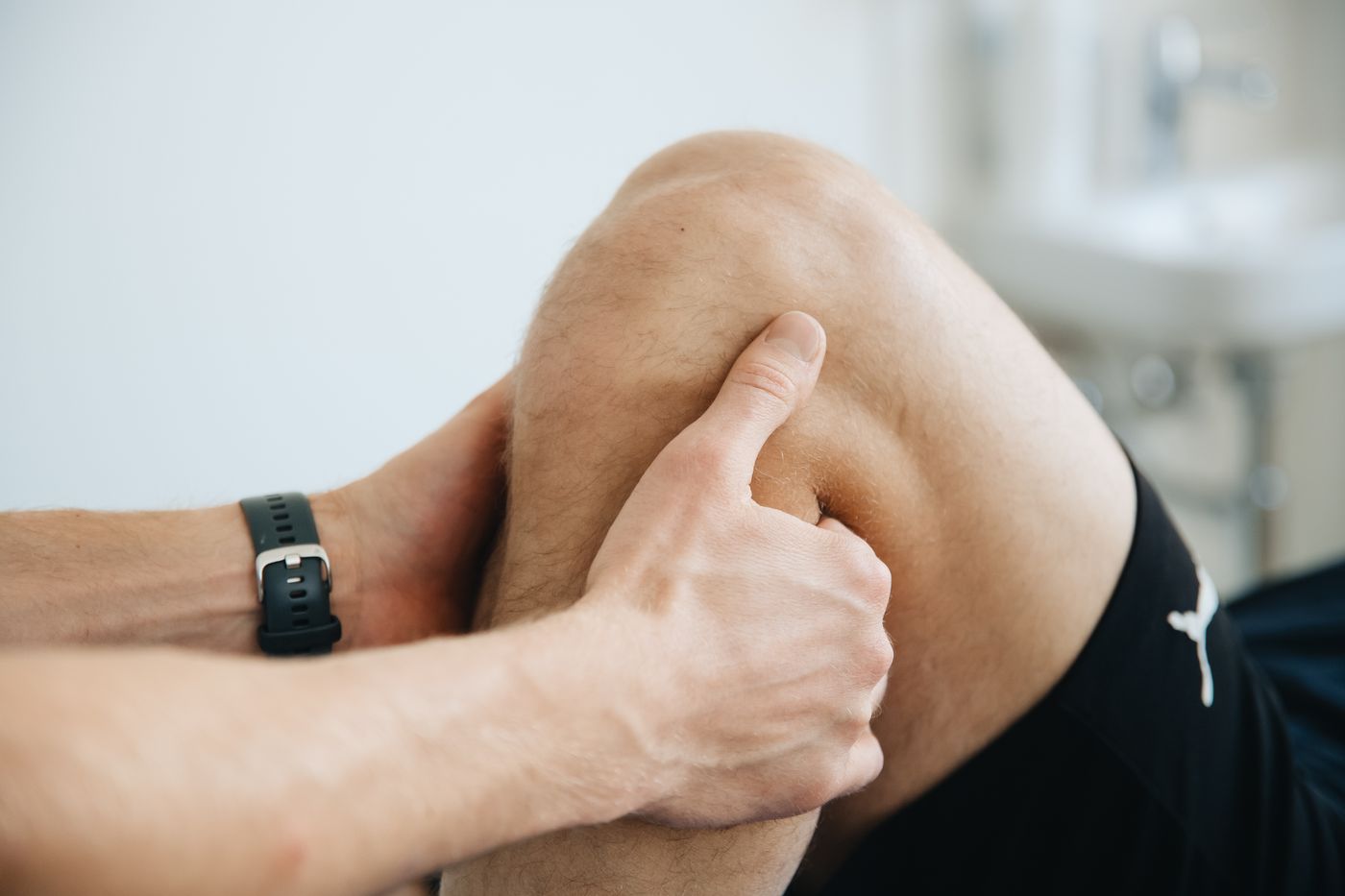
Understanding knee pain
The knee sits between the hip and the ankle, and it often takes the strain when either of them isn't doing its job. A stiff ankle, weak hips or tight thigh muscles change how force travels through the leg, and the knee is where that load shows up.
Most knee pain in active people is an overload problem rather than damage inside the joint: irritation behind the kneecap, a sore patellar tendon, or a tight IT band on the outside of the knee. Youth athletes going through growth spurts can also get pain where the tendon attaches just below the knee. Injuries from a twist or impact are different, and the exam is how we tell them apart.
What usually drives it
Training load that outpaces the tissue. A jump in mileage, more jumping and landing, or a new heavy squat block can irritate the kneecap joint and tendons before they have had time to adapt.
Weak hips and thighs. When the glutes and quads aren't controlling the leg well, the knee tends to drift inward on landing and squatting, which loads the front and inside of the knee.
Stiff ankles and tight soft tissue. Limited ankle bend and tight quads, IT band or calves mean the knee absorbs more of the load and may not track as smoothly.
Growth in youth athletes. During growth spurts, bones can lengthen faster than muscles and tendons keep up, and the spots where tendons attach around the knee get sore with running and jumping.
Your plan of care
Care follows what the assessment finds, and for most knee pain rehab exercises are the core of it. Hip and thigh strength, landing and squat mechanics, and a gradual return to the running, jumping or lifting that brought it on, progressed as the knee tolerates more load.
Hands-on work clears the way for that. Instrument-assisted soft tissue work (IASTM, Graston-style) and myofascial release free up tight quads, IT band and calves, and chiropractic extremity adjustments and mobilization restore motion where the ankle, hip or the joints around the knee have stiffened up.
For youth athletes, we also talk with the athlete and their parents about managing training volume through busy seasons and growth spurts, so the plan fits the sport schedule rather than fighting it.
What we look for
We start with where the pain is, how it began, whether there was a twist, pop or impact, and what your running, sport or training looks like right now. Then an exam: how you squat, step down and land, hip and ankle mobility, strength through the hips and thighs, and tests that check the ligaments, meniscus and kneecap.
That tells us whether this is an overload problem we can work with or an injury that needs imaging or an orthopedic opinion first. If it is the latter, we tell you and refer you before treating. Otherwise care usually starts the same visit, with a short set of exercises you can begin straight away.
What you can do at home
Manage the load, don't rest completely. Cut back the runs, jumps or heavy squats that bring the pain on, and keep training what you comfortably can. Complete rest tends to leave the knee less ready for load, not more.
Use pain as a guide. Mild discomfort during exercise that settles within a day is usually fine. Pain that builds during a session or is worse the next morning means the dose was too much.
Keep up the homework. Short, regular sessions of the exercises we give you are what build the knee's tolerance for training. A few minutes most days is the goal.
Signs that need a different first stop
- A knee that locks, won't fully straighten, or gives way after an injury
- Rapid swelling within hours of a twist or a pop
- Inability to bear weight on the leg
- A hot, red, swollen knee with fever or feeling unwell
- Calf pain, swelling or warmth, especially after surgery, travel or time off your feet (possible blood clot)
If any of these apply, see a medical doctor before booking with us. If symptoms are sudden or severe, go to the emergency room or call 911.
Knee Pain FAQs
For knee pain from overload, tight soft tissue, or stiffness in the hips and ankles, rehab exercises, soft-tissue work and joint mobilization are a common, conservative approach. The first visit is about finding what is driving your symptoms, and we refer you on if the exam suggests a ligament or meniscus injury that needs imaging or an orthopedic opinion.
Yes. Knee pain is common in young runners, jumpers and field and court athletes, especially during growth spurts. We assess them carefully, keep the plan age-appropriate and involve parents in managing training load through the season.
Not necessarily. Most people can keep training with some changes to volume, depth or impact while the knee settles. We'll help you work out what to modify and how to build back to full training safely.
Related conditions
Ready to feel like yourself again?
Trust us with your wellness and recovery needs. Book your visit today and let's build a personalized plan around you.