
Myofascial Release in Austin, TX
Targeted soft-tissue work, from percussion to trigger point therapy, that frees tight fascia.
Understanding myofascial release
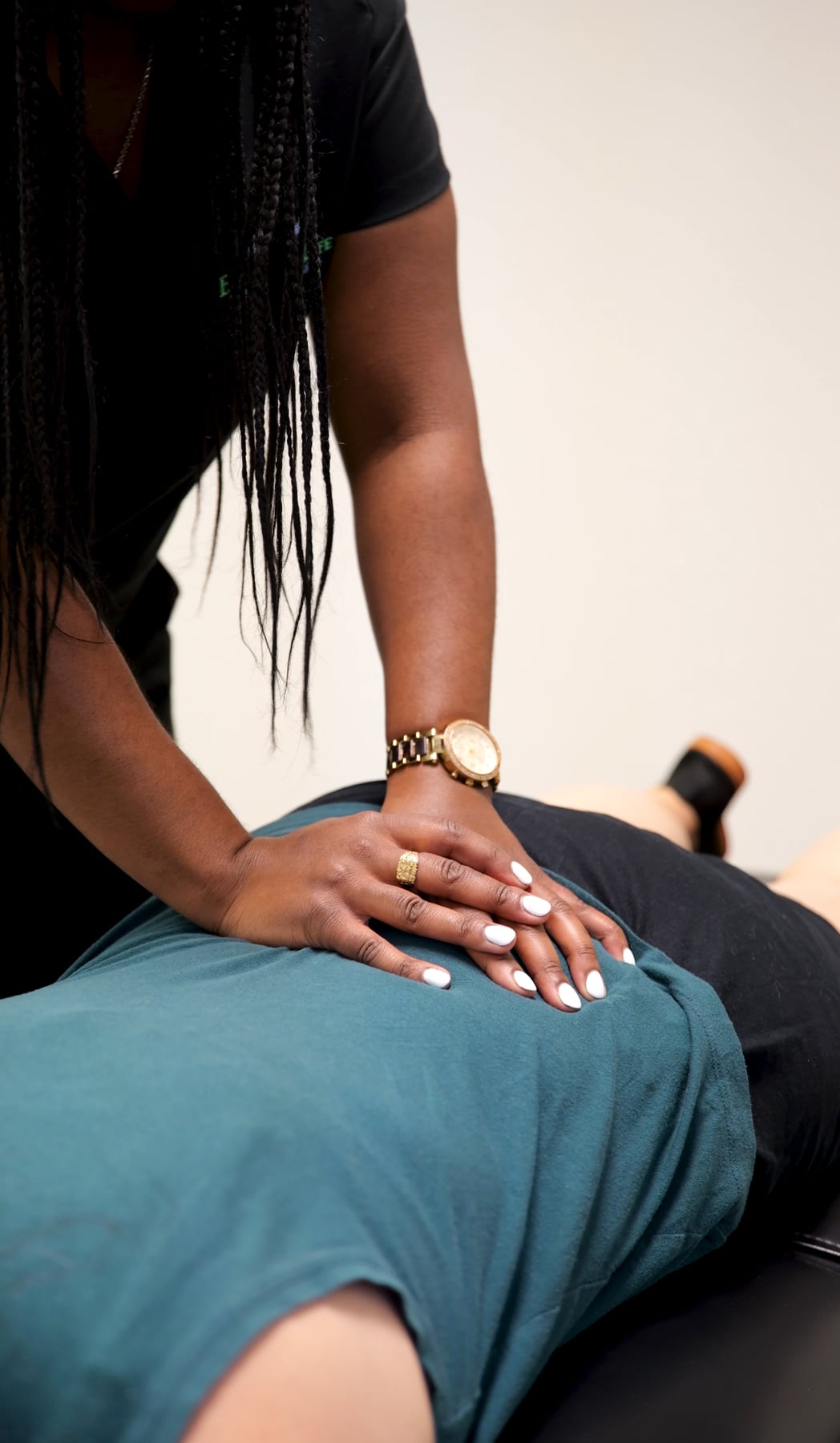
Myofascial release is targeted, clinical soft-tissue work aimed at the specific restrictions causing your pain or limited movement. Dr. Janay Scott uses a variety of techniques, from percussion massage to trigger point therapy to instrument-assisted soft-tissue mobilization, to release tight muscle and fascia and restore healthy glide.
Your visit, step by step
We assess how you move, find the restricted tissue driving your symptoms, and work it with hands-on pressure, percussion, and stretching. It can feel intense over a tight area but shouldn't be unbearable. You'll often feel looser right away, and we send you home with simple release work so the gains hold.
What actually happens
We watch you move. Before touching anything, we look at where the restriction actually shows up. Fascia refers pain well away from the problem, so the sore spot is often not the source.
We find the restriction. Hands-on, working through the layers until we find the tissue that is not gliding. You will usually recognize it the moment we land on it.
We work at a pressure you can breathe through. Sustained pressure, percussion, or a tool, depending on the area. It can feel intense, but you should always be able to breathe normally. If you cannot, it is too much.
We recheck, then give you homework. Range gets retested so the change is measurable. You leave with one or two simple releases to hold the gain between visits.
What fascia is, and why it matters
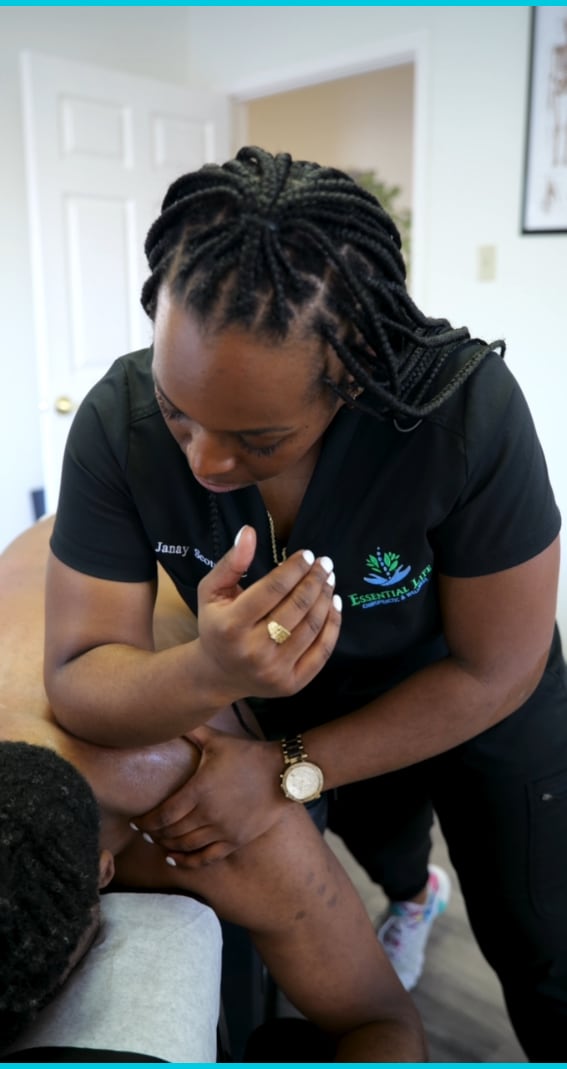
Fascia is the connective tissue that wraps every muscle, and it is continuous. That is the important part: it does not stop at the edge of one muscle, which is how a restriction in your hip ends up presenting as shoulder pain.
Healthy fascia glides. Layers slide over each other as you move. After an injury, surgery, or simply years of holding one position, that glide is lost and the layers behave more like one stuck sheet.
The work is aimed at restoring the glide, not at flattening the muscle. That is why it is slower and more specific than a general massage, and why it can produce a change that a rub-down does not.
Why we work where it does not hurt
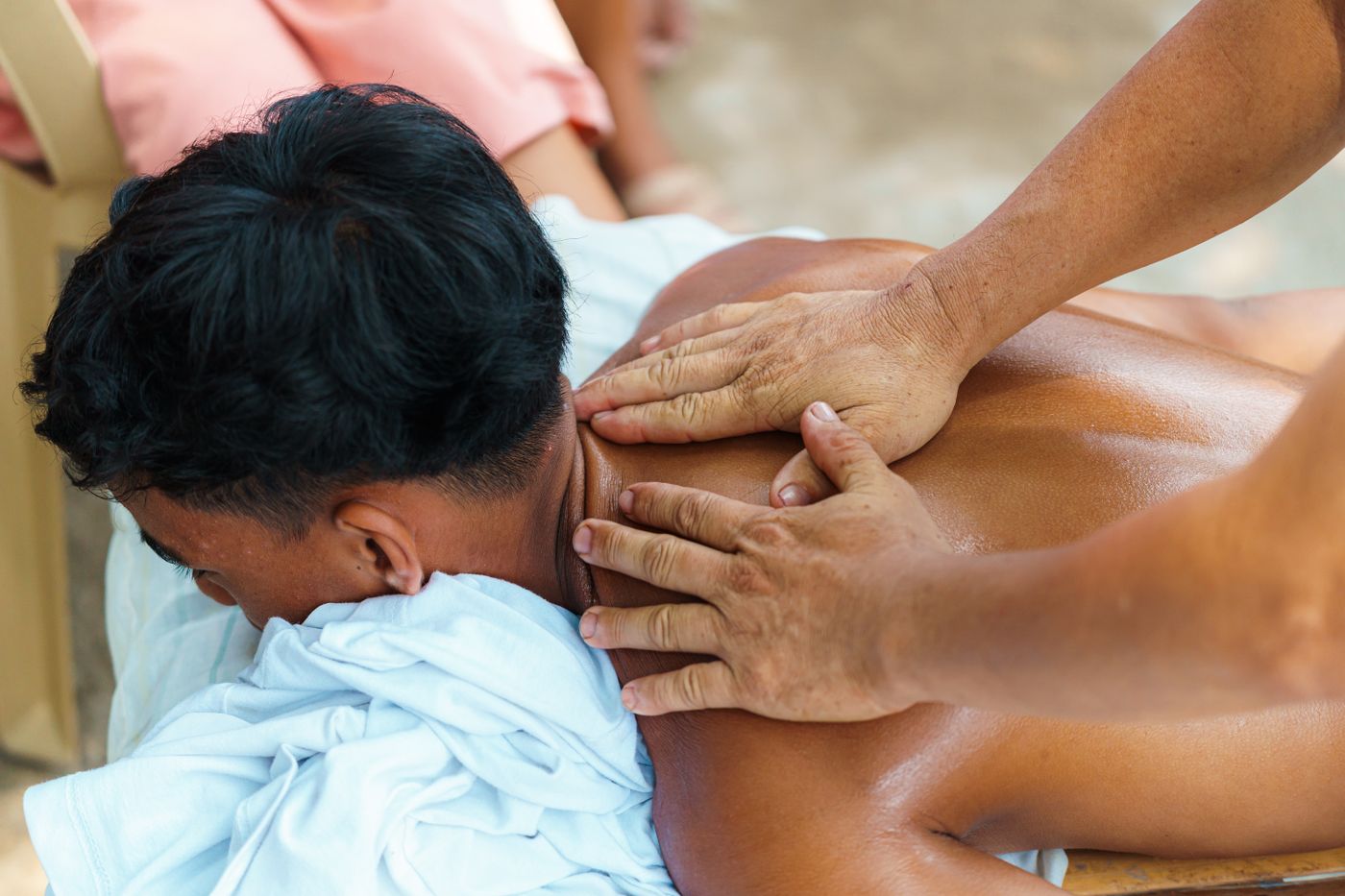
Trigger points refer. A band in your upper trapezius produces a headache behind the eye. One in your glute sends pain down the leg. Work only where it hurts and you spend the session chasing the symptom.
So do not be surprised when we spend most of a neck-pain appointment on your mid-back and shoulder. We will explain the link at the time, and you will usually feel the connection as soon as we find the right spot.
Intense, but never unbearable
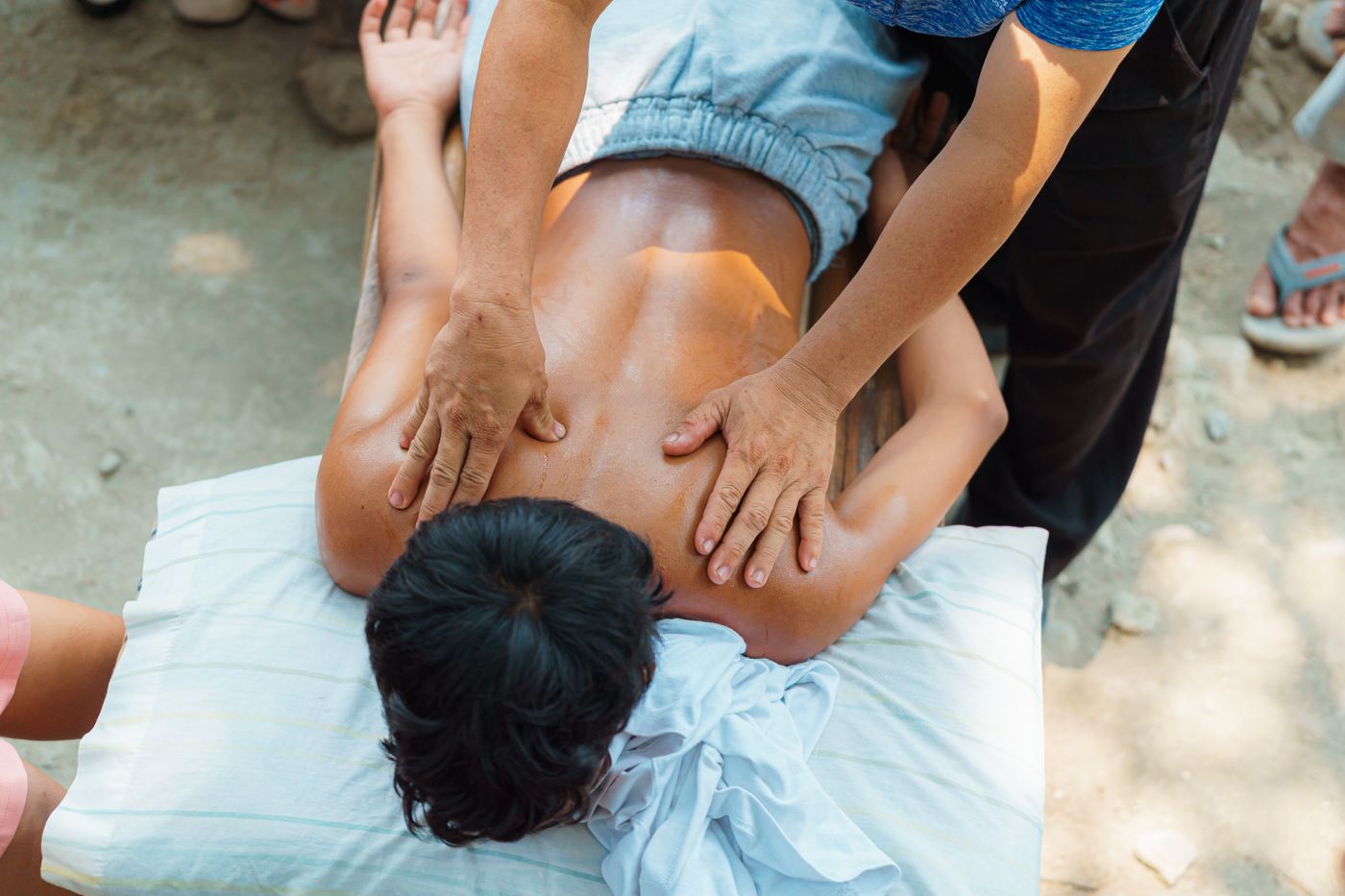
Good soft-tissue work sits at the edge of comfortable. There is a specific ache when we find the right tissue, and most people recognize it as productive rather than painful.
The rule is simple: you should be able to breathe normally throughout. Holding your breath or bracing means we have gone past useful and into counterproductive, because the muscle tightens against us.
Mild soreness for a day afterwards is normal and similar to post-exercise ache. Anything sharper than that is worth telling us about, because it changes how we approach the next session.
Who this is not for
This is safe for most people. The usual side effect is a day of mild soreness, occasionally some light bruising over a stubborn area.
We avoid or modify it over acute injuries, open wounds, active infections, and certain skin and circulatory conditions. If you are on blood thinners, tell us, because we work considerably lighter.
If the pattern points at something outside soft tissue, we stop and refer rather than keep working on it.
The tools we reach for
Different restrictions respond to different inputs. Most sessions use two or three of these rather than just one.
Sustained pressure. Slow, held pressure into a restriction until it softens. The oldest technique here and still the most reliable.
Trigger point work. Direct pressure on a specific tender band until the referral pattern eases. Brief and pointed rather than broad.
Percussion. A rapid-oscillation device over larger muscle groups. Covers ground quickly and is far more comfortable than deep manual work on big areas.
Active release. You move the limb while we hold tension on the tissue. Often the fastest way to free something that only restricts through part of the range.
Myofascial Release FAQs
No. A massage is mainly for general relaxation. Myofascial release is targeted, clinical soft-tissue work aimed at the specific restrictions causing your pain or limited movement, part of a plan to fix the problem, not just feel good for an hour.
It can be intense over a tight or irritated area, but it shouldn't be unbearable. We work at a pressure you can breathe through, and most people feel looser right away. Any soreness afterward is usually mild and fades within a day.
A range of them: percussion (instrument) massage, trigger point therapy, and instrument-assisted soft-tissue mobilization, chosen to match your body and what's driving your symptoms.
Other ways we can help
Ready to feel like yourself again?
Trust us with your wellness and recovery needs. Book your visit today and let's build a personalized plan around you.