
Shoulder Pain Care in Austin, TX
Pain, pinching or stiffness when you reach, lift, throw or press overhead. We find what is limiting the shoulder and build a plan to get you back to training, competing and moving comfortably.
Understanding shoulder pain
The shoulder trades stability for range. It moves further than any other joint in the body, and it relies on the rotator cuff, the shoulder blade and the upper back working together to stay controlled. When one part of that system stops doing its share, the others pick up the load, and that is usually where the pain shows up.
For athletes and active people, most shoulder pain is a load problem rather than a single injury: irritated rotator cuff tendons, tight tissue around the joint, or a shoulder blade and mid-back that have stopped moving well. The neck can also send pain into the shoulder, so we check there too before deciding how to treat it.
What usually drives it
Rotator cuff overload. The small muscles that steady the shoulder get irritated when training volume, overhead work or throwing goes up faster than they can adapt. This is common in lifters, swimmers and volleyball players.
A stiff upper back and shoulder blade. The arm needs the mid-back to extend and the shoulder blade to rotate as it goes overhead. When they don't, the joint gets crowded and the tissue at the front takes the strain.
Tight soft tissue around the joint. Restricted muscle and fascia in the chest, lats and back of the shoulder limit range and pull the joint out of a good position. Old strains can leave scar tissue that does the same.
Irritation in the neck. Stiffness or irritation in the lower neck can refer pain into the shoulder and down the arm. If the shoulder itself tests well, the neck is the next place we look.
Your plan of care
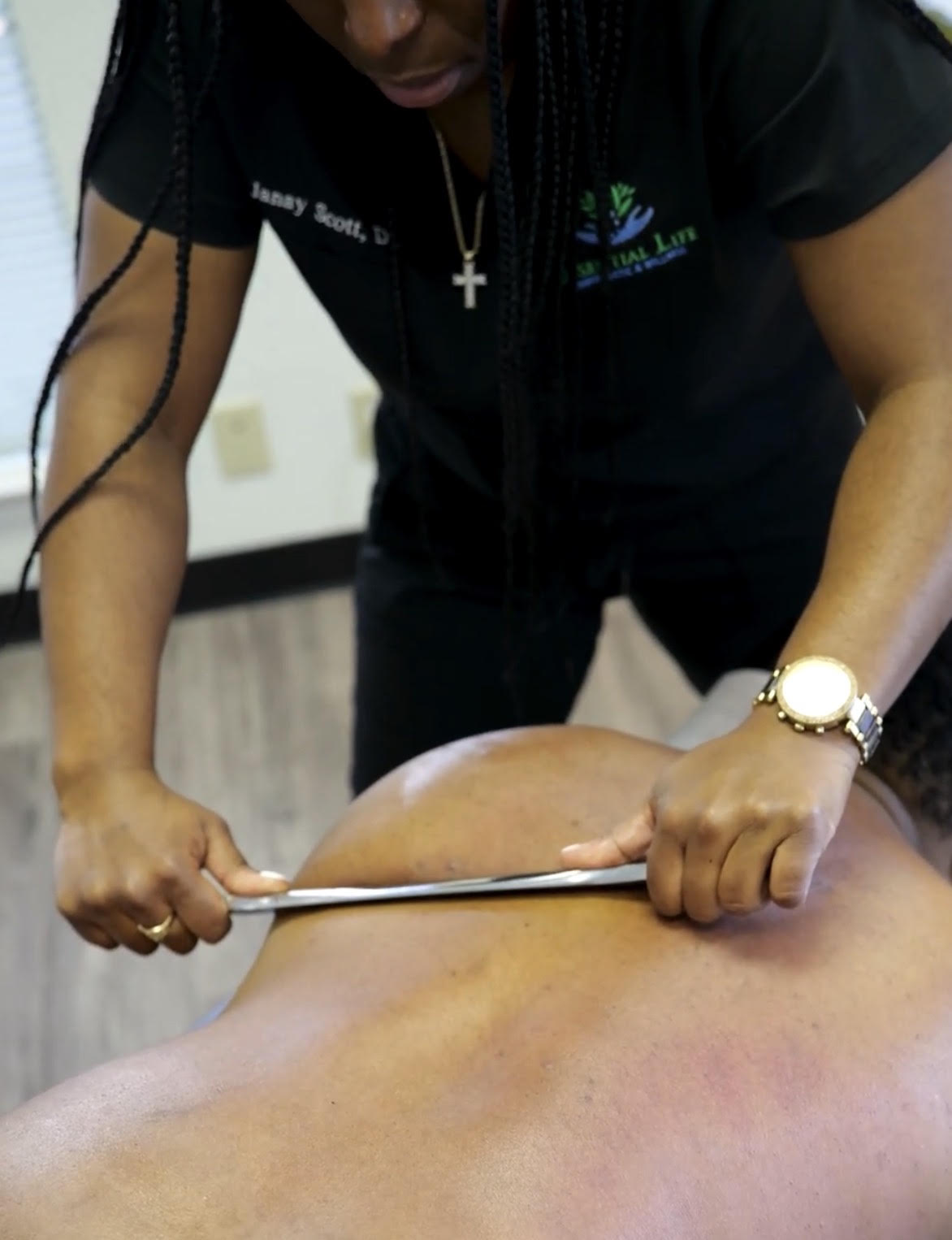
Care follows what the assessment finds. Instrument-assisted soft tissue work (IASTM, Graston-style) is often where we start, freeing up restricted tissue around the shoulder blade, chest and rotator cuff so the joint can move through its full range. Myofascial release and trigger point work address tight bands in the upper back, chest and back of the shoulder.
Where the mid-back, ribs or the shoulder joint itself have stiffened up, gentle chiropractic adjustments and mobilization restore motion, with lighter techniques when the area is irritable.
Rehab exercises are what make the progress last. Shoulder blade control, rotator cuff strength and a gradual return to pressing, throwing or overhead training, so you finish care knowing how to keep the shoulder strong under load.
What we look for
We start with how the pain began, which movements bring it on, and what your sport, training or work asks of the shoulder. Then a hands-on exam: how the shoulder, shoulder blade and upper back move, which positions are painful, rotator cuff strength in different directions, and a check of the neck along with reflexes, strength and sensation in the arm.
That tells us whether the problem is in the shoulder itself, the tissue around it or coming from the neck, and how irritable it is right now. If anything suggests a tear, instability or something else that needs imaging or a medical opinion first, we tell you and refer you before treating. Otherwise care usually starts the same visit.
What you can do at home
Keep it moving within comfort. Gentle movement through the day usually helps more than keeping the arm still. Work in the range that feels manageable and don't force through a pinch.
Modify your training, don't stop it. Swap painful overhead or wide-grip movements for ones you can do comfortably while the shoulder settles. We'll tell you when and how to bring them back.
Watch how you sleep. Lying on the sore shoulder often keeps it irritated. Try the other side, or your back with a pillow supporting the arm.
Signs that need a different first stop
- Shoulder or left-arm pain with chest pain, shortness of breath, sweating or nausea (this can be a heart problem, so call 911)
- A shoulder that has dislocated, or a visible deformity after a fall or impact
- Sudden inability to lift the arm after an injury, which can mean a significant tear
- A hot, red, swollen shoulder with fever or feeling unwell
- Shoulder pain with unexplained weight loss, constant night pain or a history of cancer
If any of these apply, see a medical doctor before booking with us. If symptoms are sudden or severe, go to the emergency room or call 911.
Shoulder Pain FAQs
For shoulder pain with a mechanical cause, such as irritated rotator cuff tendons, tight soft tissue or a stiff upper back, soft-tissue work, adjustments and rehab exercises are a common, conservative approach. The first visit is about finding which of those is driving your symptoms, and we refer you on if the exam points elsewhere.
It depends on the cause and how long you've had it. A recently irritated shoulder often settles sooner than one that has been building for months, and tendon problems need time and gradual loading. We'll give you an honest estimate after the assessment and adjust the plan as you progress.
Usually, with some changes. Most people can keep training while the shoulder settles. We'll help you work out what to modify, what to pause and how to build back to full pressing, throwing or overhead work safely.
Related conditions
Ready to feel like yourself again?
Trust us with your wellness and recovery needs. Book your visit today and let's build a personalized plan around you.