
Scoliosis Care in Austin, TX
A sideways curve in the spine that can bring stiffness, muscle tightness or uneven shoulders and hips. Care doesn't straighten the curve. It focuses on helping you move comfortably, stay strong and keep doing the sports and activities you enjoy.
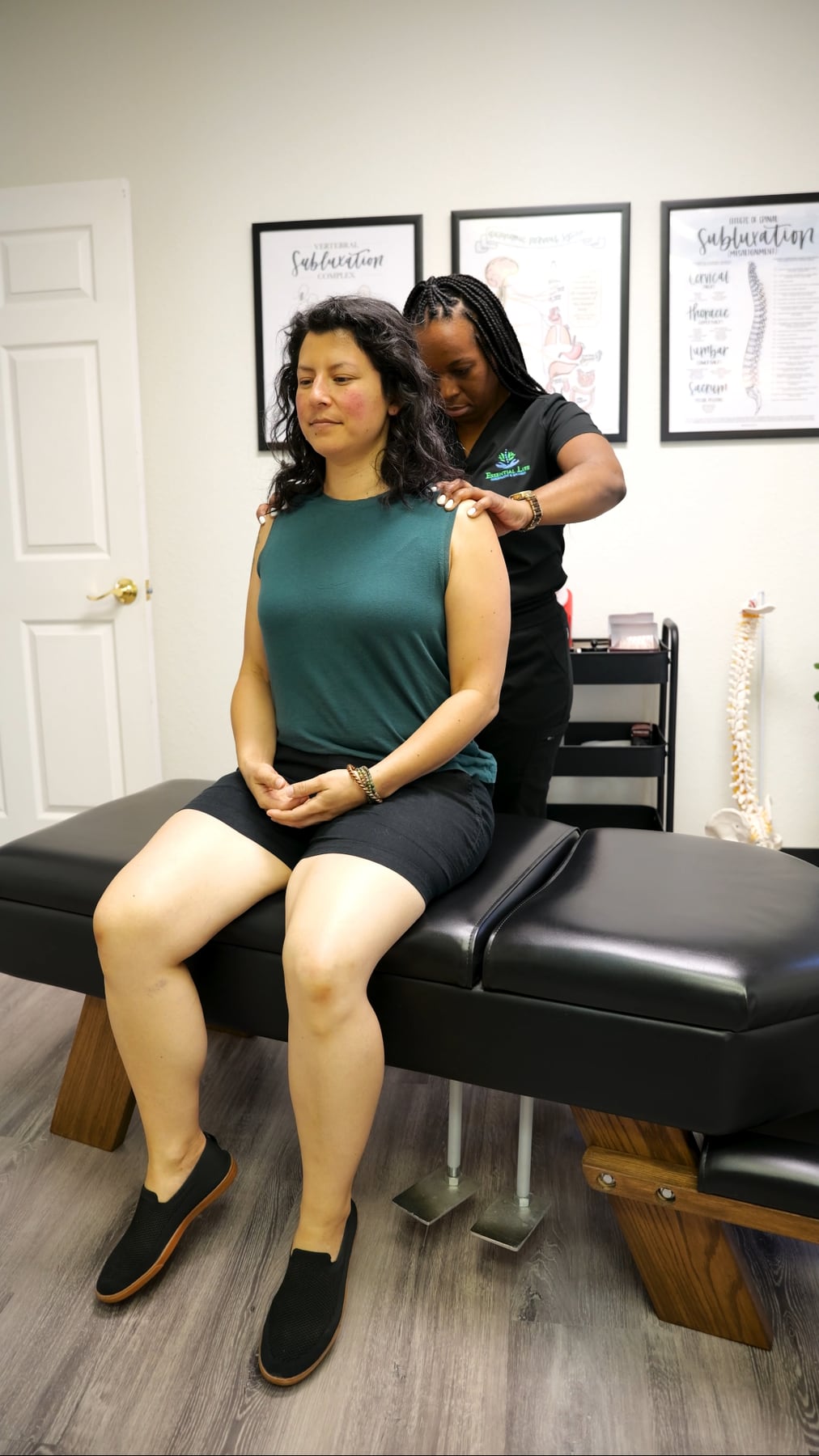
Understanding scoliosis
Scoliosis is a sideways curve of the spine, usually with some rotation of the vertebrae. It most often first shows up in late childhood or the teen years, usually with no known cause, and many curves are mild. It can also develop in adults as the spine changes with age.
Chiropractic care does not straighten or correct a structural scoliosis curve. What it can do is help with the stiffness, muscle tension and aches that often come with one, and keep you moving and training comfortably. For growing kids and teens, the curve itself is monitored by their pediatrician or orthopedic specialist, who decides whether bracing or other treatment is needed.
What usually drives it
Idiopathic scoliosis. The most common type, usually appearing during the growth spurts of late childhood and adolescence. There is no single known cause, and it is not caused by posture, backpacks or sport.
Growth. A curve is most likely to change while a child is still growing, which is why regular monitoring through the teen years matters.
Wear in adult spines. In adults, changes in the discs and joints can produce a curve later in life, often alongside low-back stiffness.
Uneven muscle load. A curve changes how load is shared across the back, so the muscles on one side tend to work harder and tighten. That is often where the day-to-day discomfort comes from.
Your plan of care
Care is built around comfort, mobility and strength, not changing the curve. Where joints in the spine, ribs or pelvis are stiff, gentle chiropractic adjustments help restore motion, with drop-table, instrument-assisted or mobilization techniques chosen to suit your age, comfort and how your spine moves.
The muscles working harder on one side of a curve often tighten up. Myofascial release and therapeutic cupping work on that tissue directly, which is where much of the day-to-day stiffness sits.
Rehab exercises do the most lasting work: core and back strength, mobility where you are stiff, and movement patterns that suit your sport. For young athletes, this sits alongside the monitoring their pediatrician or orthopedist is already doing, so they can move better, recover smarter and perform stronger.
What we look for
We start with when the curve was found, who is monitoring it, and any X-ray reports or bracing plans, so please bring them. We also ask about your sport or activities and where you feel stiffness or discomfort. Then a physical exam: posture, shoulder and hip levels, how your spine bends and rotates, and a check of strength, reflexes and sensation.
From there we explain plainly what care can and can't do for your curve. If anything suggests the curve needs medical assessment first, such as a curve in a growing child that hasn't been checked by their doctor yet, we refer you to the right specialist. Otherwise care usually starts the same visit.
What you can do at home
Stay active. Sport and exercise are generally encouraged with scoliosis. Keep training, and tell us which movements feel stiff or uncomfortable so we can work on them.
Little and often. A few minutes of the strength and mobility work we give you most days does more than a long session once a week.
Keep up with monitoring. For kids and teens who are still growing, keep every check-up with their pediatrician or orthopedist. Changes in the curve are tracked through them, not through us.
Signs that need a different first stop
- A curve that seems to be getting worse quickly, especially in a child or teen who is still growing
- Significant or worsening back pain in a child or teen with scoliosis
- Scoliosis with numbness, tingling or weakness in the arms or legs, or changes in balance or walking
- Any new change in bladder or bowel control
- Shortness of breath or difficulty breathing
If any of these apply, see a medical doctor before booking with us. If symptoms are sudden or severe, go to the emergency room or call 911.
Scoliosis FAQs
No. Chiropractic care does not correct a structural scoliosis curve, and we won't tell you otherwise. What it can do is help with the stiffness and muscle tension that often come with a curve, and support your mobility and strength so you can stay active. Decisions about the curve itself, like bracing, sit with your pediatrician or orthopedic specialist.
In most cases, yes, and staying active is generally encouraged. Their pediatrician or orthopedist should guide any limits, especially if they wear a brace. We work alongside that plan, helping young athletes stay mobile, strong and comfortable in training.
For most people, yes. We screen carefully at the first visit, use gentler techniques where they suit, and adapt the plan for age, comfort and any bracing. If something in the exam points to a medical issue, we refer you before treating.
Related conditions
Ready to feel like yourself again?
Trust us with your wellness and recovery needs. Book your visit today and let's build a personalized plan around you.