
Disc Injury Care in Austin, TX
A bulging or herniated disc in the low back or neck that makes bending, sitting, lifting or turning your head painful. We work out how sensitive it is, then build a plan that respects the disc while getting you back to moving and training.
Understanding disc injury
Discs sit between the vertebrae and act as shock absorbers, with a tough outer ring around a softer center. A disc injury usually means that outer ring has been strained or torn, so the disc bulges or, in a herniation, some of the inner material pushes through. It happens most often in the low back (lumbar) and the neck (cervical).
Disc injuries are common in active adults and don't always cause pain. When they do, symptoms can stay in the back or neck, or irritate a nearby nerve and travel into the leg or arm. Many settle with time and conservative care, but they need a careful exam first, because a few signs mean you should see a medical doctor before anything else.
What usually drives it
Bending and lifting under load. Heavy or repeated lifting with the spine rounded puts the most pressure on the back of the disc. A single lift can bring it on, but it is often the last of many.
Long hours of sitting. Sitting, especially slumped, keeps steady pressure on the lumbar discs. Desk work and long drives often set the scene before a minor movement brings the pain on.
Neck posture. Hours looking down at a phone, laptop or bike handlebars load the cervical discs in a similar way, which is why disc-related neck pain often builds slowly.
Age and repetitive strain. Discs lose some water and height over time, which makes the outer ring less forgiving. Contact sports and repetitive training add to that wear.
Your plan of care
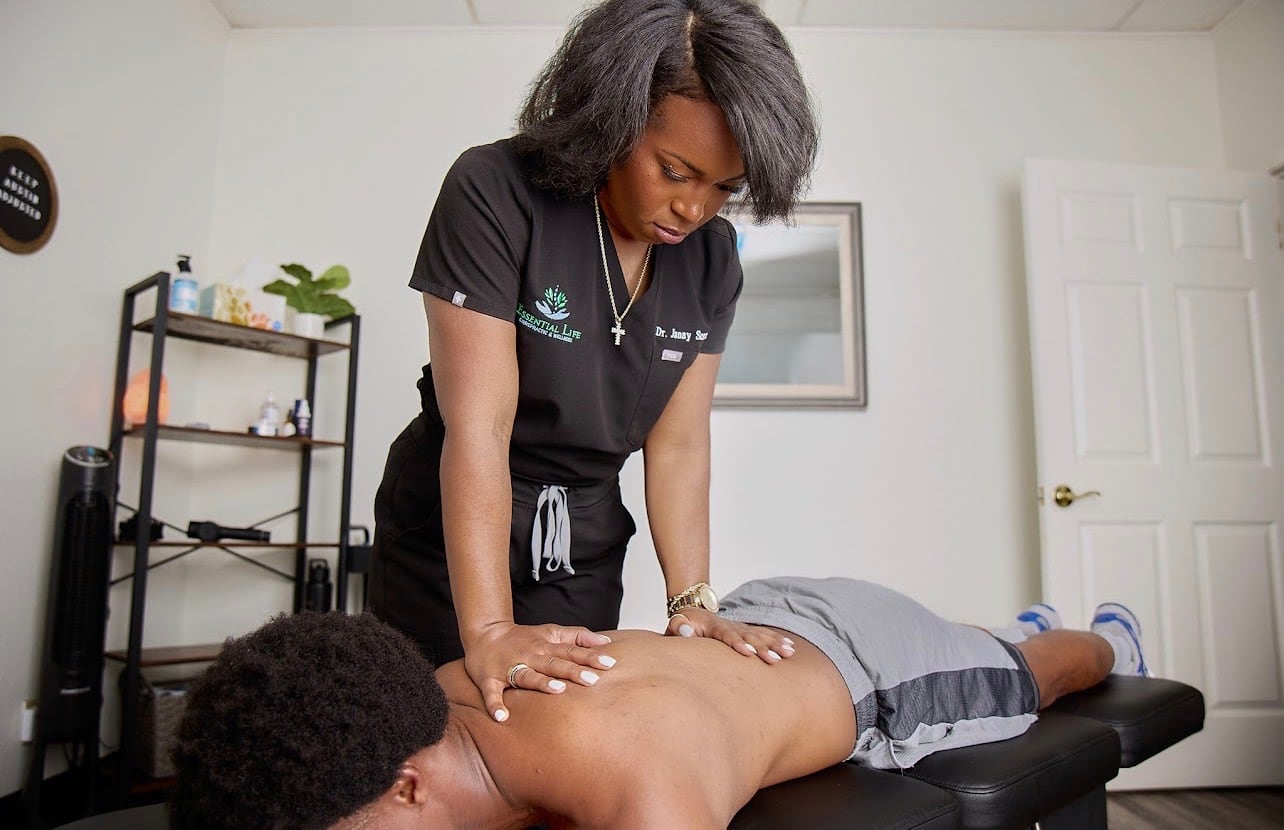
Disc injuries are handled carefully. Where nearby joints in the spine have stiffened to protect the area, gentle chiropractic care restores motion. Drop-table, instrument-assisted adjusting and mobilization keep the force low, and the technique is chosen for how sensitive the disc is right now.
The muscles around an injured disc often tighten to guard it. Myofascial release and, where appropriate, instrument-assisted soft-tissue work ease that guarding so you can move with more confidence.
Rehab exercises do the long-term work: positions and movements that calm your symptoms first, then core, hip and upper-back strength, and a gradual return to bending, lifting and training under load. The goal is to leave you knowing how to manage the disc, not just how to get through a flare.
What we look for
We start with how and when the pain started, which positions ease it or make it worse, and whether anything travels into your arms or legs. Then a physical and neurological exam: how your spine moves, which movements bring the pain on, and reflexes, strength and sensation in both arms or both legs.
That tells us how irritable the disc is and whether a nerve is involved. Bring any MRI or X-ray reports you already have. If the exam suggests you need imaging or a medical opinion first, we tell you and refer you before treating. Otherwise care usually starts the same visit.
What you can do at home
Use the positions that ease it. Most disc injuries have positions that calm them and positions that flare them. Use the ones we show you, and change position often rather than holding one for long.
Keep walking. Short, regular walks are usually kinder to an irritated disc than bed rest or long periods of sitting. Build them up as they feel comfortable.
Hold off on heavy bending and lifting. Loaded forward bending, heavy deadlifts and repeated toe-touch stretches put the most strain on the disc. We'll tell you when and how to bring them back.
Signs that need a different first stop
- Numbness or reduced feeling in the saddle area (groin, inner thighs or buttocks)
- New difficulty controlling or emptying your bladder or bowels
- Weakness in a leg or arm that keeps getting worse, or foot drop (the front of the foot catching or slapping as you walk)
- Pain, numbness or weakness in both legs at the same time
- Neck pain with clumsy hands, trouble with balance or a change in the way you walk
If any of these apply, see a medical doctor before booking with us. If symptoms are sudden or severe, go to the emergency room or call 911.
Disc Injury FAQs
For many disc injuries without warning signs, conservative care is a reasonable first step: gentle techniques chosen for how sensitive the disc is, soft-tissue work for the muscle guarding around it, and rehab exercises to rebuild your tolerance for load. If the exam points to something that needs a medical doctor or a surgical opinion, we refer you.
Not always. Many disc injuries can be assessed with a careful history and exam. Imaging is usually recommended when there are neurological changes or warning signs, or when symptoms aren't improving as expected. If you already have an MRI or X-ray report, bring it to your first visit.
Getting you back to training is the goal, and it is done with a plan rather than all at once. That usually means changing the lifts that load the disc most while it settles, then building strength and tolerance back step by step. We'll give you an honest estimate after the assessment and adjust it as you progress.
Related conditions
Ready to feel like yourself again?
Trust us with your wellness and recovery needs. Book your visit today and let's build a personalized plan around you.