
Sciatica Care in Austin, TX
Pain, tingling or numbness that runs from your low back or glute down the leg. We find what is irritating the nerve and build a plan to get you back to sitting, training and moving comfortably.
Understanding sciatica
Sciatica isn't a diagnosis on its own. It describes symptoms that follow the path of the sciatic nerve, from the low back through the buttock and down the back of the leg, sometimes as far as the foot. The nerve is the messenger; the real question is what is irritating it.
For most active people the answer is mechanical: a lumbar disc, a stiff joint in the low back or pelvis, or tight muscle in the hip pressing on the nerve along its route. Each of those is managed differently, which is why the assessment comes before any treatment.
What usually drives it
Disc irritation. A lumbar disc that bulges or herniates can press on or inflame the nerve root as it leaves the spine. This is one of the most common sources of sciatica in active adults.
Stiff joints in the low back or pelvis. Restricted lumbar or sacroiliac joints change how load moves through the area, and the surrounding tissue gets irritated as a result.
Tight hip muscles. The piriformis and other deep hip rotators sit right on top of the nerve. When they are overworked or tight, they can produce sciatica-like symptoms without any disc involvement.
Load and posture over time. Long hours sitting, heavy lifting with poor positioning, or a jump in training volume add up gradually, often well before the leg symptoms start.
Your plan of care
Care follows what the assessment finds. Where a stiff joint in the low back or pelvis is involved, gentle chiropractic adjustments restore motion; drop-table and mobilization techniques keep the force light when the area is irritable.
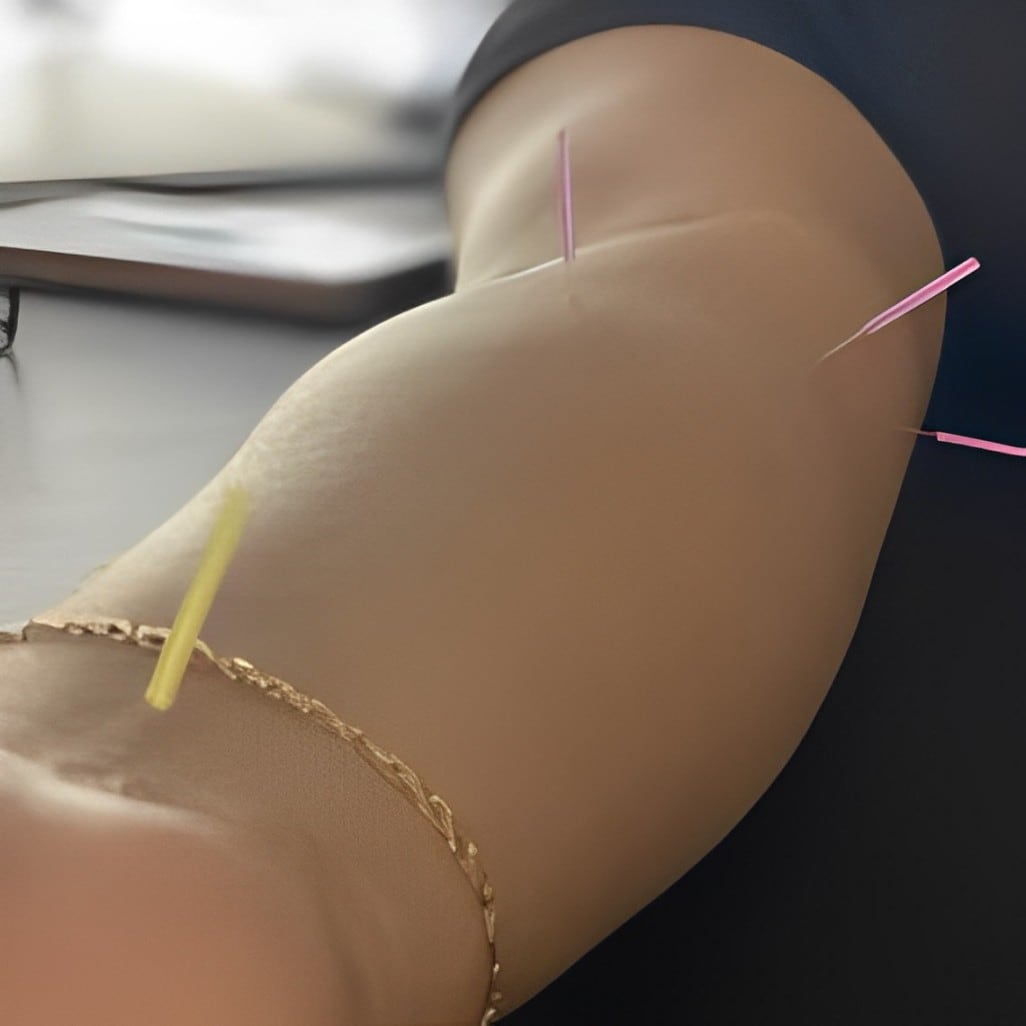
When tight hip and glute muscles are part of the picture, myofascial release and, where appropriate, dry needling work directly on the tissue that sits along the nerve's path.
Rehab exercises are what make the progress last. Core and hip strength, nerve mobility work and a gradual return to the positions and training loads that used to bring symptoms on, so you finish care knowing how to keep it from coming back.
What we look for
We start with when and how the symptoms began, what makes them better or worse, and how much they limit your sitting, sleep and training. Then a physical and neurological exam: how your low back and hips move, which positions bring the leg symptoms on, and reflexes, strength and sensation in both legs.
That tells us whether the nerve is being irritated at the spine or further down, and how sensitive it is right now. If anything points to a problem that needs imaging or a medical opinion first, we tell you and refer you before treating. Otherwise care usually starts the same visit.
What you can do at home
Break up long sitting. Sitting for long stretches is one of the most common aggravators. Get up and walk for a few minutes every 30 to 45 minutes, especially on long drives.
Keep moving, gently. Short, easy walks usually help more than bed rest. Stay within what feels manageable and note which movements make the leg symptoms better or worse.
Hold off on heavy lifting and deep stretching. Hard hamstring stretches and heavy loaded bending can irritate the nerve further while it is sensitive. We'll tell you when to bring them back.
Signs that need a different first stop
- Numbness in the groin, inner thighs or around the buttocks (saddle area)
- Any new change in bladder or bowel control
- Weakness in the leg or foot that is getting worse, or foot drop
- Symptoms in both legs at once
- Sciatica after a significant fall or accident, or alongside fever, unexplained weight loss or a history of cancer
If any of these apply, see a medical doctor before booking with us. If symptoms are sudden or severe, go to the emergency room or call 911.
Sciatica FAQs
For sciatica with a mechanical cause, such as a stiff joint, disc irritation or tight hip muscles, chiropractic care, soft-tissue work and rehab exercises are a common, conservative approach. The first visit is about finding which of those is driving your symptoms, and we refer you on if the exam points elsewhere.
It depends on the cause and how long you've had it. Many people notice changes within the first few visits, but a disc-related case usually takes longer than a muscular one. We'll give you an honest estimate after the assessment and adjust the plan as you progress.
Not necessarily. Most people can keep training with some changes while the nerve settles. We'll help you work out what to modify, what to pause and how to build back to full training safely.
Related conditions
Ready to feel like yourself again?
Trust us with your wellness and recovery needs. Book your visit today and let's build a personalized plan around you.