
TMJ Care in Austin, TX
Jaw tightness, clicking or soreness when you chew, often with a stiff neck or headaches alongside it. We look at how your jaw, neck and posture work together and build a plan that fits with your dentist's care, whether you clench in the weight room or at your desk.
Understanding TMJ
TMJ is short for the temporomandibular joint, the hinge just in front of each ear that connects your jaw to your skull. When people say they have TMJ, they usually mean a temporomandibular disorder: pain, tightness or clicking in the jaw joint and the muscles that move it.
Jaw problems have several possible sources, including the joint itself, the disc inside it, your teeth and bite, and the chewing muscles. Your dentist looks after the teeth, bite and joint structure. Our part is the muscles of the jaw, neck and shoulders and how you hold your head, which often play a role and are easy to overlook.
What usually drives it
Clenching and grinding. Clenching under effort, stress or during sleep overloads the chewing muscles. Many athletes clench hard on heavy lifts and in contact sports without noticing.
Tight chewing muscles. The masseter and temporalis can develop trigger points that refer pain into the teeth, ear and temple, and limit how far the jaw opens.
Head and neck posture. When the head sits forward of the shoulders, the jaw and neck muscles work harder to hold it there, and that load adds up over long days.
Neck and upper back stiffness. The upper neck and the jaw work closely together. Stiffness and muscle tension in one often show up in the other.
Your plan of care
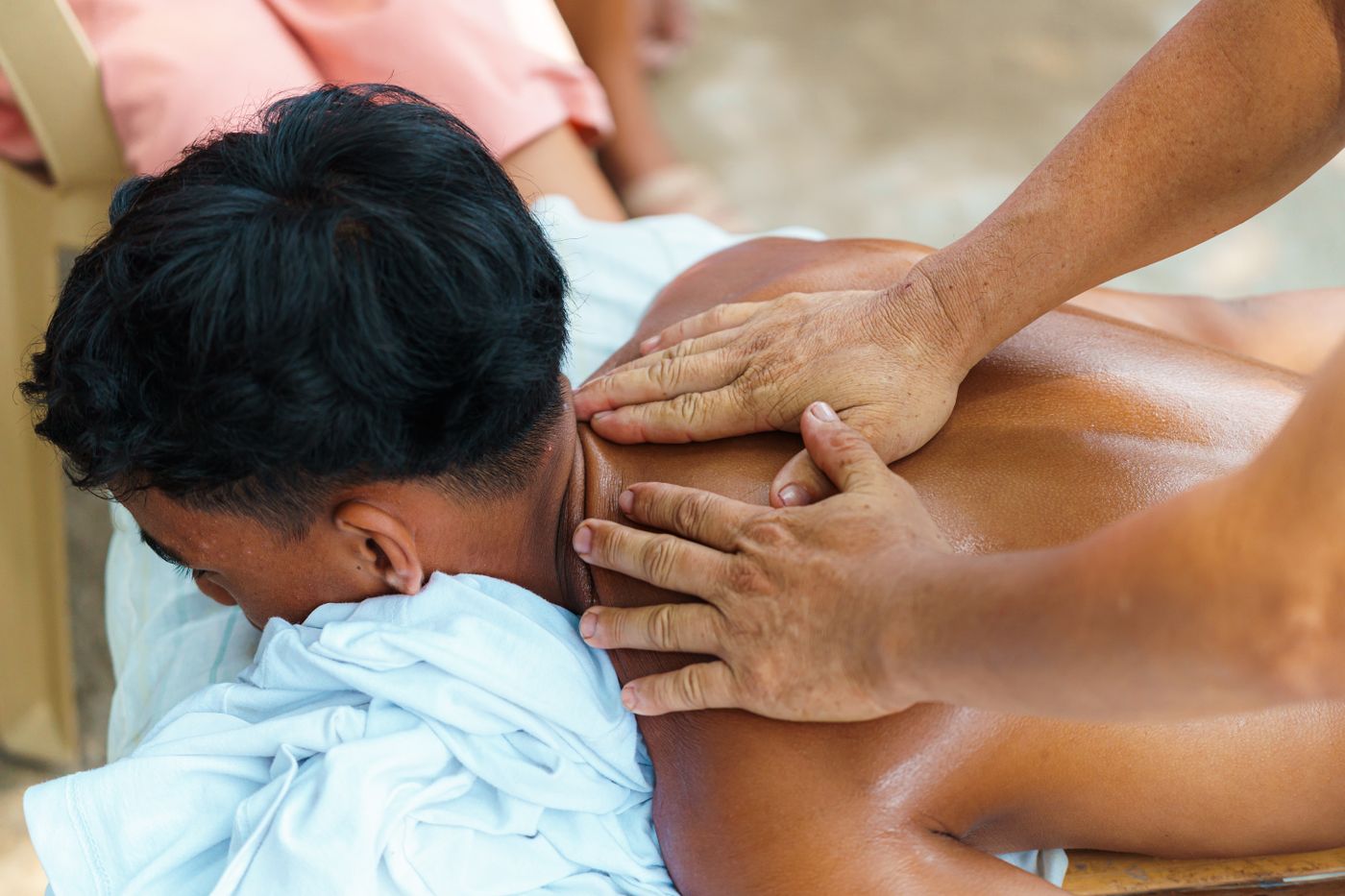
Care follows what the assessment finds, and we coordinate with your dentist. If something points to the teeth, bite or joint structure, that goes to them first. When the problem is mostly muscular, myofascial release works on the jaw muscles and the neck and shoulder tissue around them, using gentle sustained pressure and trigger point work.
If the upper neck or upper back is stiff, gentle chiropractic adjustments and mobilization restore motion there, which can ease some of the load on the jaw. The force stays light, and nothing is done that you aren't comfortable with.
Rehab exercises tie it together: jaw control and relaxation drills, neck and upper back strength, and help noticing when you clench during training or at your desk, so you have simple tools to manage it day to day.
What we look for
We start with when the jaw symptoms began, whether there is clicking, locking or pain with chewing, any dental work or night guard, and when you notice yourself clenching. Then an exam of how your jaw opens and tracks, which muscles are tight and tender, and how your neck and upper back move.
If anything points to a dental, joint or medical issue, we tell you and refer you to your dentist or physician before treating. If you already see a dentist for it, we work alongside their plan. Otherwise care usually starts the same visit.
What you can do at home
Lips together, teeth apart. At rest, your teeth shouldn't touch. Check in a few times a day and let your jaw relax, especially during focused work and between sets.
Go easy on the jaw while it is sore. Softer foods, smaller bites and less gum chewing give the muscles a break. Avoid opening very wide when you can.
Notice clenching in training. Pay attention to clenching on heavy lifts, sprints and in contact sports. If you wear a mouthguard or night guard, keep using it as your dentist advised.
Signs that need a different first stop
- A jaw that locks open or closed and won't release
- Swelling in the jaw, face or neck, or jaw pain with fever
- Jaw pain with chest pain, shortness of breath, sweating or nausea, which needs emergency care right away
- Jaw pain after a blow to the face, a fall or a collision, or a sudden change in how your teeth fit together
- New jaw pain when chewing after age 50, especially with scalp tenderness, headache or vision changes
If any of these apply, see a medical doctor before booking with us. If symptoms are sudden or severe, go to the emergency room or call 911.
TMJ FAQs
When jaw pain and tightness are mostly muscular, or tied to neck stiffness and posture, soft-tissue work, gentle adjustments for the neck and rehab exercises are a common, conservative approach. We work alongside your dentist and refer you to them if the exam points to the teeth, bite or the joint itself.
Yes. Your dentist is the right person to assess your teeth, bite and jaw joint, and to decide whether you need a night guard or other dental care. We look after the muscles and the neck, and the two work well together.
The jaw and upper neck work as a team. Head position, neck stiffness and tight shoulder muscles all change how hard the jaw muscles have to work, so looking at the jaw alone can miss part of the picture.
Related conditions
Ready to feel like yourself again?
Trust us with your wellness and recovery needs. Book your visit today and let's build a personalized plan around you.